

 Post by
 Software engineering is no longer tied to one type of company. Developers now work in healthcare, finance, artificial intelligence, cybersecurity, gaming, cloud infrastructure, and dozens of other sectors. Some industries offer massive salaries. Others provide stability, remote flexibility, or long-term job security.
The challenge is choosing the right path.
A software engineer building AI infrastructure at a startup faces a completely different career experience than someone building healthcare systems or enterprise SaaS products. Compensation, stress levels, hiring demand, and career growth all vary by industry.
This guide breaks down the best industries for software engineers in 2026, including salaries, growth opportunities, technologies used, and long-term outlook.
The best industries for software engineers in 2026 are AI, fintech, cybersecurity, cloud computing, healthcare tech, and enterprise SaaS because they offer high salaries, strong hiring demand, remote opportunities, and long-term career growth.
Check out our latest blog on Data & Technology Jobs: Career Paths & Salaries
Why Industry Choice Matters for Software Engineers
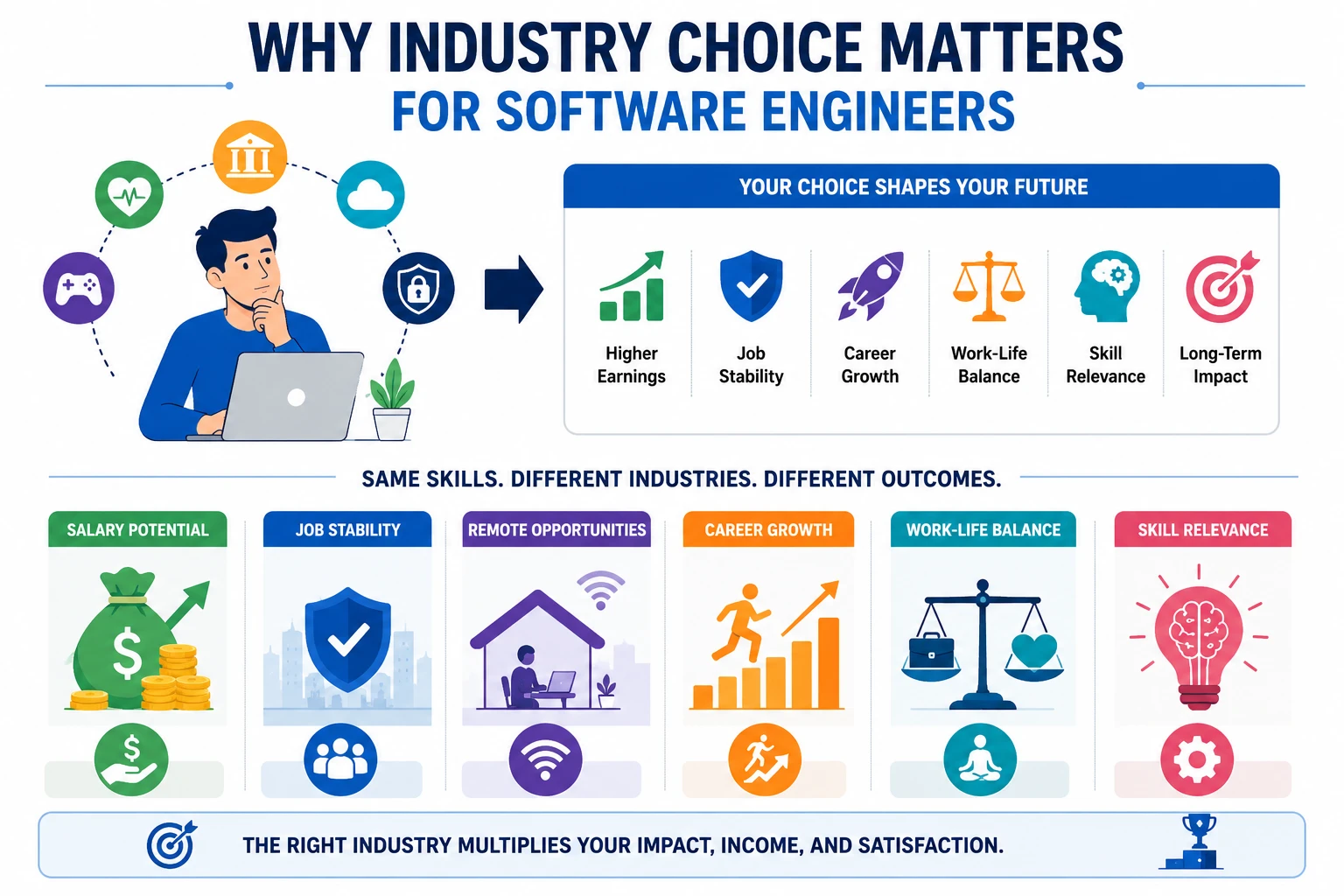
Most developers focus heavily on programming languages and frameworks. Those skills matter, but industry selection often has a bigger impact on long-term career success.
Two engineers with similar technical skills can have completely different experiences depending on where they work.
One engineer may spend years maintaining legacy enterprise systems with predictable hours and stable income. Another may work in AI infrastructure, solving difficult scaling problems while earning significantly higher compensation. A gaming engineer might work on advanced rendering systems but face tight deadlines.
Industry choice affects:
- Salary potential
- Job security
- Remote work opportunities
- Promotion speed
- Technical growth
- Work-life balance
- Future demand
- Burnout risk
Some sectors reward innovation and speed. Others prioritize reliability, security, and compliance.
For example:
- Fintech companies prioritize performance and uptime.
- Healthcare companies focus heavily on compliance and privacy.
- AI startups value experimentation and rapid iteration.
- Enterprise SaaS companies often emphasize stable product development.
Choosing the right environment matters because software engineering careers now span decades. The technologies you learn, the systems you build, and the industries you join shape future opportunities.
According to labor market reports and hiring trends, demand remains strongest in industries connected to AI, cloud infrastructure, cybersecurity, and digital transformation.
Here’s a quick comparison of the top industries for software engineers.
| Industry | Average Salary Range | Growth Potential | Work-Life Balance | Remote Opportunities |
|---|---|---|---|---|
| AI & Machine Learning | $150k–$400k+ | Extremely High | Moderate | High |
| Fintech | $140k–$350k | High | Moderate | High |
| Cybersecurity | $130k–$300k | Very High | Good | Excellent |
| Cloud Computing | $150k–$350k | Very High | Good | Excellent |
| Healthcare Tech | $120k–$260k | High | Good | Moderate |
| Enterprise SaaS | $130k–$280k | Stable | Excellent | Excellent |
| Gaming | $100k–$220k | Moderate | Challenging | Moderate |
| E-commerce | $120k–$250k | Stable | Good | High |
AI and Machine Learning Careers for Software Engineers
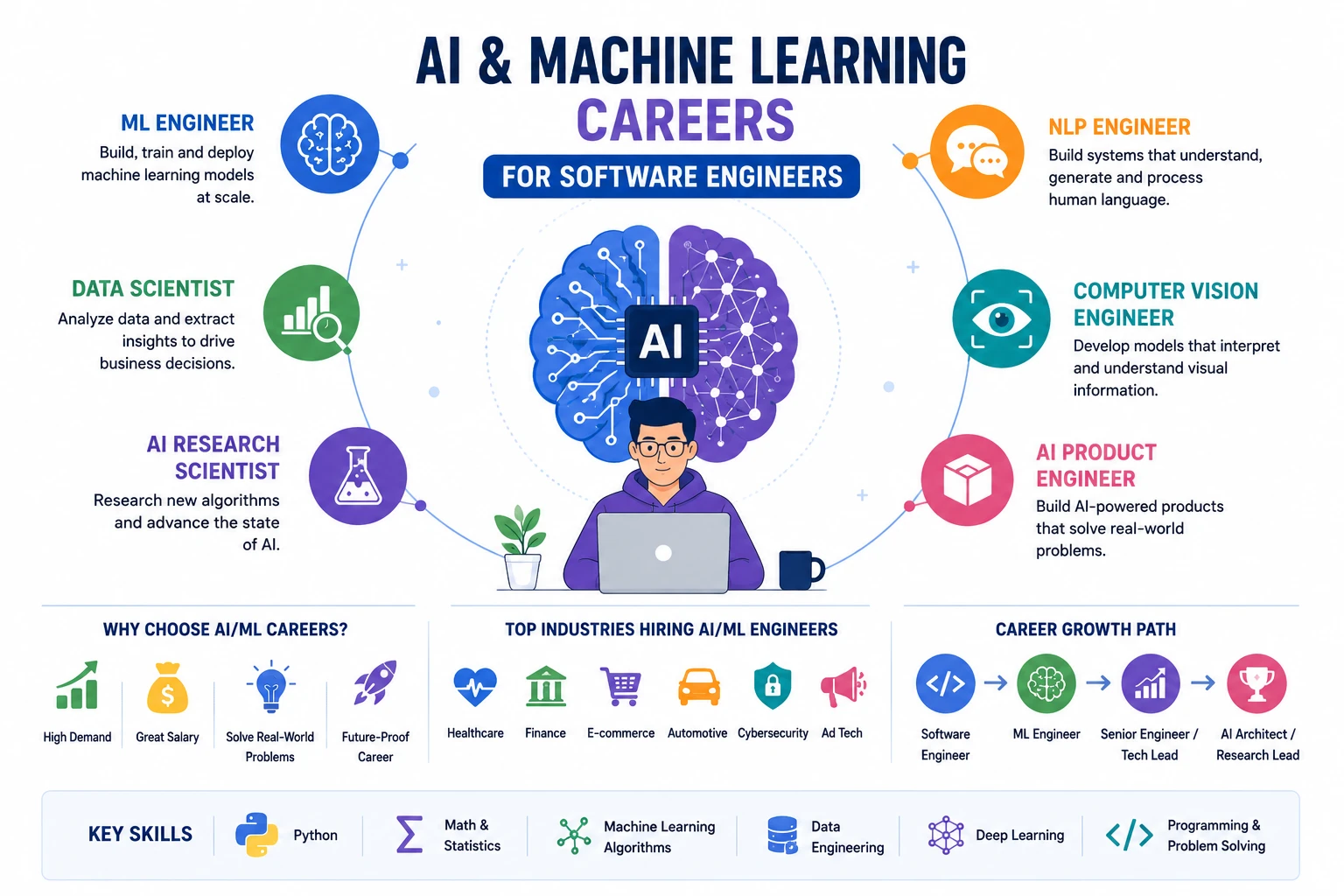
Artificial intelligence is currently the fastest-growing sector for software engineers.
Companies across nearly every industry are investing heavily in AI systems, automation platforms, large language models, recommendation engines, and intelligent analytics tools.
Software engineers in AI often work on:
- Machine learning infrastructure
- AI applications
- Large language models
- Data pipelines
- Vector databases
- Computer vision systems
- Autonomous systems
- Recommendation algorithms
This field rewards engineers who combine software development skills with problem-solving ability and strong system design knowledge.
The most common technologies include:
- Python
- PyTorch
- TensorFlow
- CUDA
- Kubernetes
- Rust
- Distributed systems tools
One major reason AI salaries are so high is the shortage of experienced engineers. Companies compete aggressively for developers who understand scalable AI infrastructure and production machine learning systems.
Many AI startups also offer substantial equity packages, which can dramatically increase compensation.
The industry moves quickly. Engineers constantly adapt to new frameworks, research breakthroughs, and infrastructure tooling. That pace creates pressure, but it also accelerates career growth.
AI is especially attractive for developers who enjoy:
- Solving complex technical problems
- Building scalable systems
- Research-heavy environments
- High-growth startups
- Cutting-edge technology
The biggest downside is intensity. Deadlines move fast, expectations stay high, and the learning curve never slows.
Still, AI remains one of the highest-paying and most future-proof software engineering career paths.
Top employers include:
- entity[“company”, “OpenAI”, “AI research and deployment company”]
- entity[“company “, “Anthropi c”, “AI safety and research company”]
- entity[“company”, “NVidia”, “Semiconductor and AI computing company”]
- entity[“company”, “Google”, “Technology and AI company”]
Fintech Software Engineering Jobs and Salaries
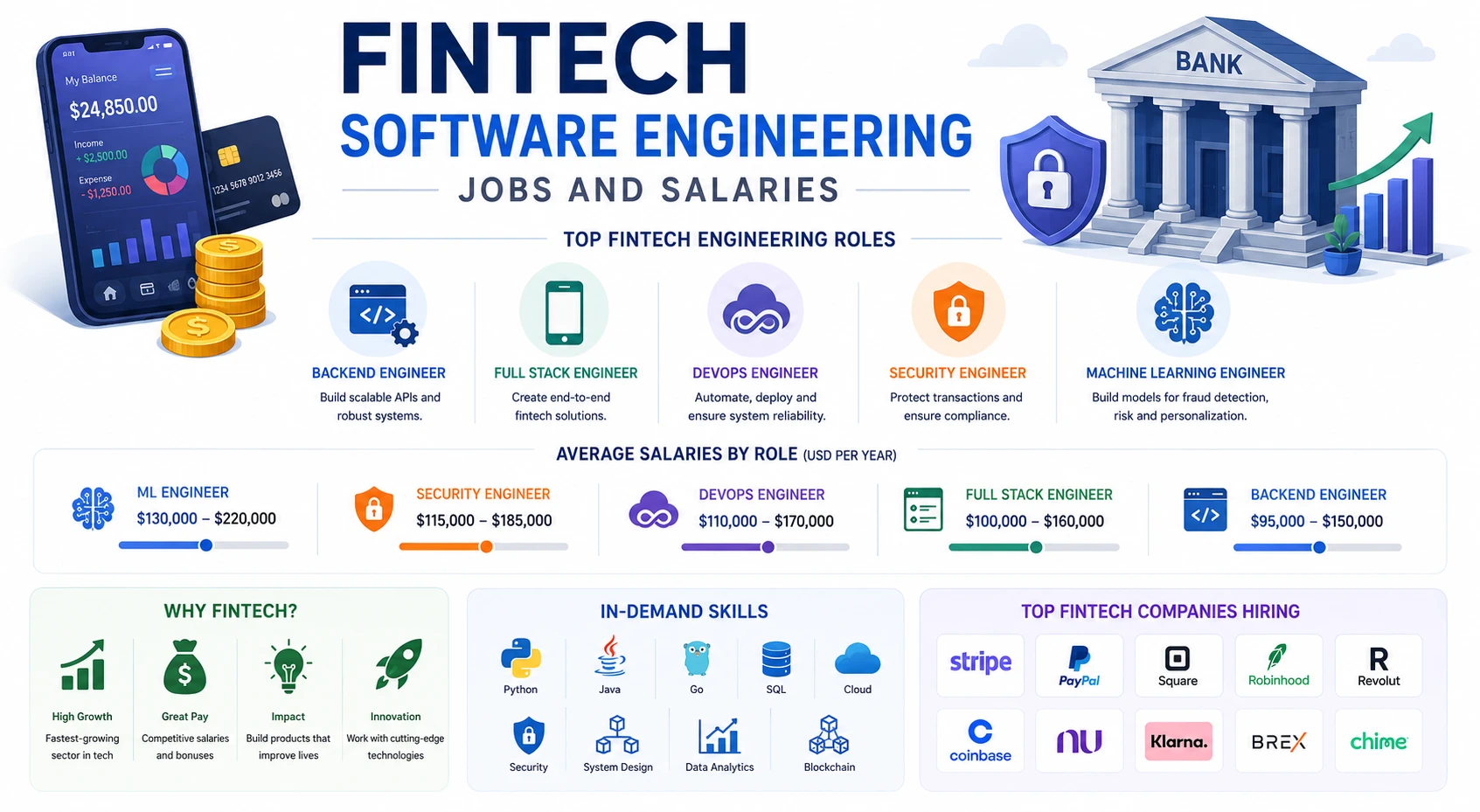
Fintech combines software engineering with banking, investing, insurance, payments, and financial infrastructure.
This sector expanded rapidly due to:
- Digital banking adoption
- Online payments
- Mobile finance apps
- Crypto infrastructure
- Automated investing
- Financial APIs
Software engineers in fintech build systems that process enormous volumes of transactions while maintaining speed, reliability, and security.
Common fintech engineering work includes:
- Payment processing systems
- Fraud detection platforms
- Trading systems
- Banking infrastructure
- Financial analytics tools
- Risk modeling systems
- Compliance automation
The technical demands are high because downtime directly impacts revenue.
Fintech companies care heavily about:
- Scalability
- Low latency
- Security
- Infrastructure reliability
- Real-time processing
Popular technologies include:
- Java
- Go
- Kafka
- Kubernetes
- PostgreSQL
- AWS
- Python
Fintech engineers often earn compensation comparable to large technology companies, especially in trading firms and high-frequency finance environments.
Many developers also appreciate the strong remote work culture developing across modern fintech startups.
The downside is pressure.
Financial systems cannot fail frequently. Security vulnerabilities create serious legal and financial consequences. Teams often operate in high-stakes environments with demanding performance expectations.
Still, fintech remains one of the best industries for software engineers seeking:
- High salaries
- Fast career growth
- Scalable systems experience
- Strong hiring demand
- Advanced backend engineering work
Major fintech companies include:
- entity[“company”, “Stripe”, “Financial infrastructure platform”]
- entity[“company “, “Block”, “Financial services and digital payments company”]
- entity[“company”, “PayPal”, “Online payments company”]
- entity[“company”, “Robinhood”, “Financial services platform”]
Why Cybersecurity Is One of the Best Industries for Software Engineers
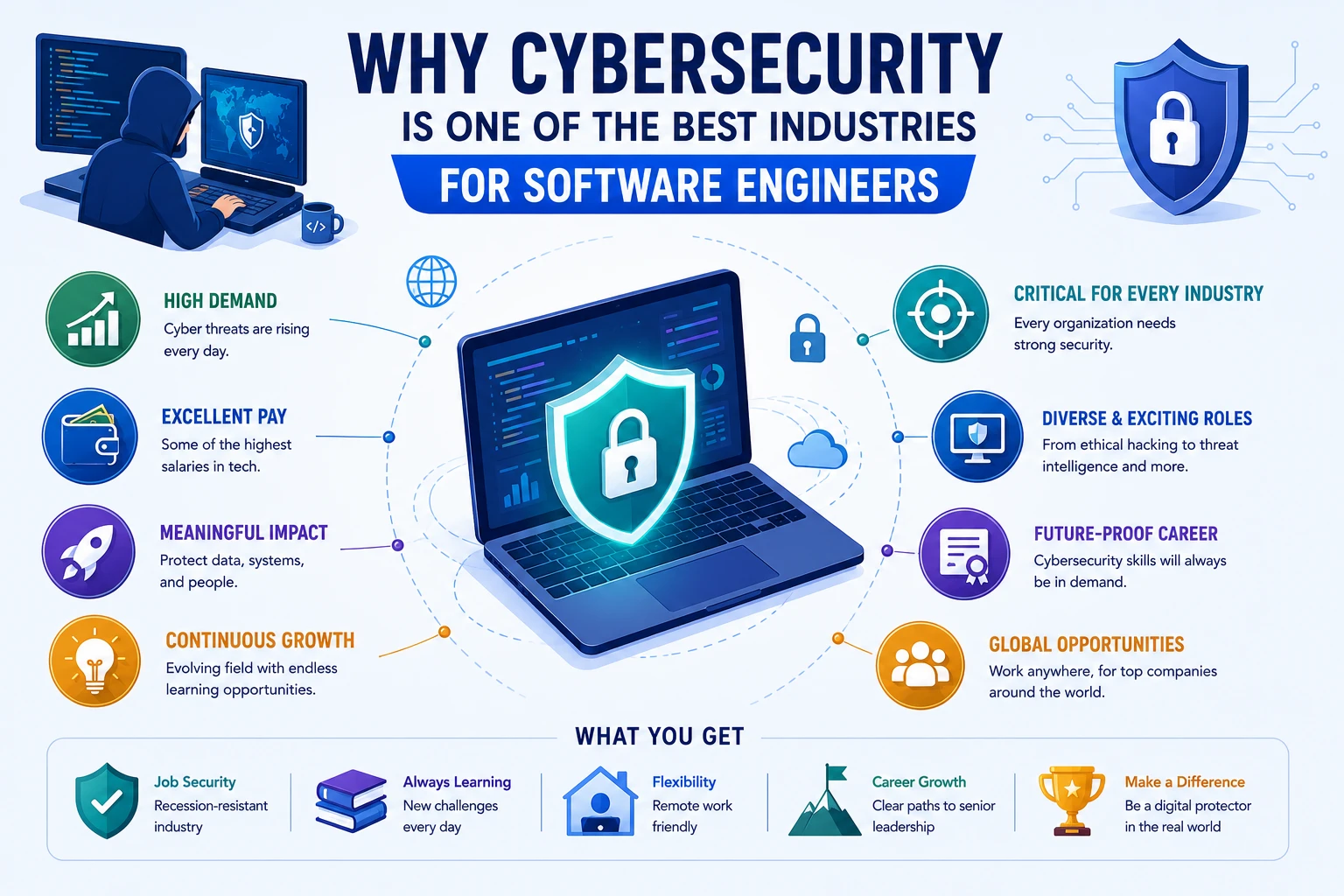
Cybersecurity has become essential for every major company.
Organizations now face constant threats from:
- Ransomware
- Data breaches
- Identity theft
- Infrastructure attacks
- API exploits
- Cloud vulnerabilities
As cyber threats increase, demand for security-focused software engineers continues to grow.
Software engineers in cybersecurity build:
- Authentication systems
- Security monitoring platforms
- Threat detection tools
- Encryption systems
- Identity management platforms
- Endpoint protection software
This industry offers excellent long-term stability because cybersecurity spending rarely declines, even during economic downturns.
Engineers with experience in:
- Networking
- Linux systems
- Cloud infrastructure
- Backend engineering
- DevSecOps
- Distributed systemsThey They
are especially valuable.
Cybersecurity engineers often work closely with cloud and infrastructure teams to secure applications at scale.
One major advantage of cybersecurity is job security.
The global shortage of security professionals continues to grow, which means skilled engineers remain in high demand.
Cybersecurity also offers strong remote work opportunities because much of the work can be done from distributed environments.
The field suits developers who enjoy:
- Analytical problem solving
- System architecture
- Infrastructure engineering
- Defensive engineering
- Security research
Top cybersecurity companies include:
- entity[“company”, “CrowdStrike”, “Cybersecurity technology company”]
- entity[“company”, “Palo Alto Networks”, “Cybersecurity company”]
- entity[“company”, “Cloudflare”, “Web infrastructure and security company”]
- entity[“company”, “Okta”, “Identity and access management company”]
Cloud Computing Careers for Software Engineers
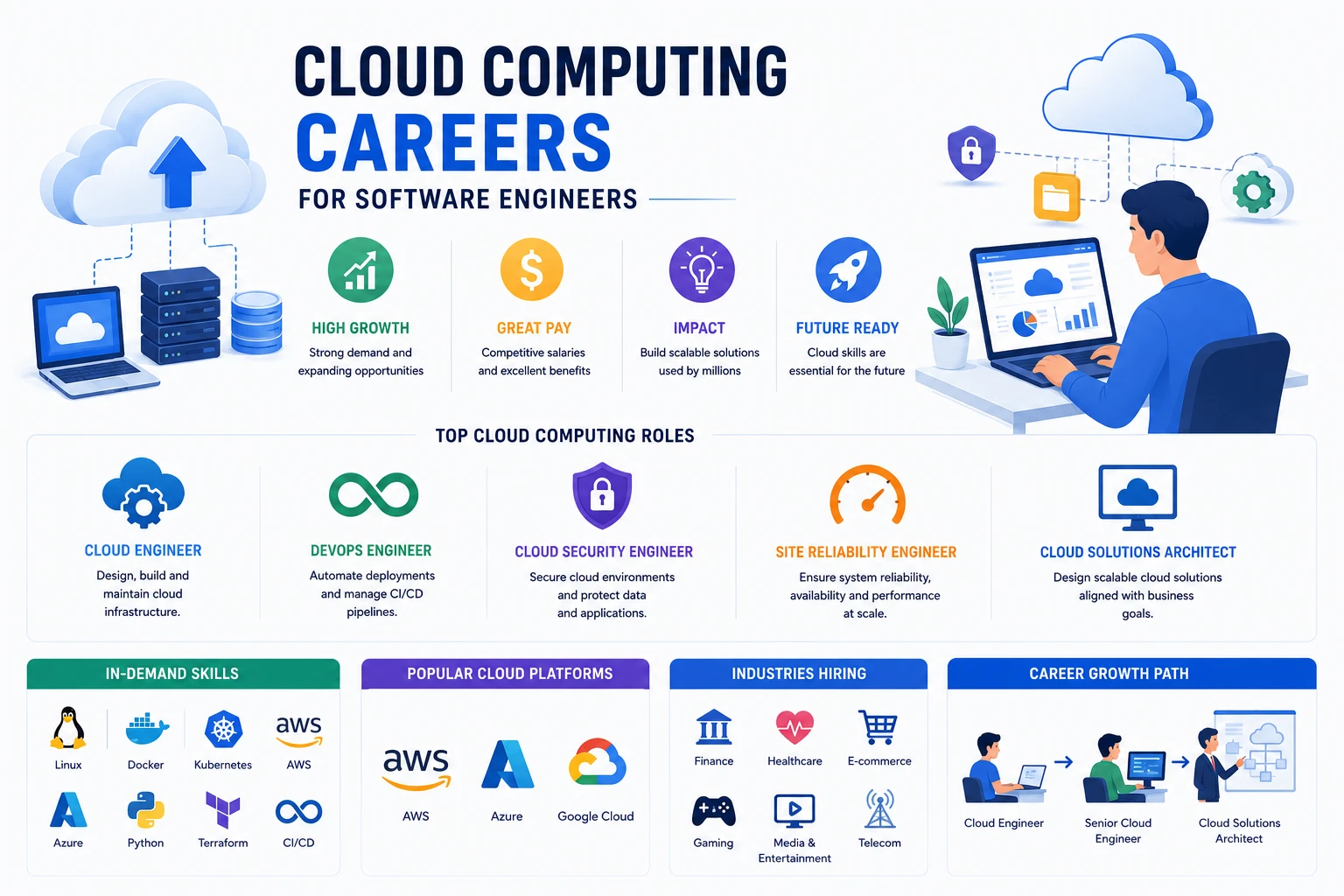
Cloud computing powers nearly every modern software product.
Companies now rely heavily on cloud infrastructure to scale applications, manage distributed systems, process data, and deliver global services.
Software engineers in cloud computing often work on:
- Infrastructure automation
- Distributed systems
- Container orchestration
- CI/CD pipelines
- Platform engineering
- Monitoring systems
- Cloud security
- Site reliability engineering
This industry rewards engineers who understand scalability and infrastructure reliability.
Core technologies include:
- Kubernetes
- Docker
- Terraform
- AWS
- Azure
- Google Cloud
- Prometheus
- Linux
Cloud engineering is one of the most future-proof software engineering career paths because nearly every industry now depends on cloud infrastructure.
A cloud engineer can move between:
- SaaS companies
- AI startups
- fintech firms
- healthcare platforms
- e-commerce companies
- enterprise infrastructure teams
That flexibility creates strong long-term career stability.
Compensation also remains excellent because experienced infrastructure engineers are difficult to replace.
Many software engineers transition into cloud engineering after gaining backend development experience.
The work can become complex because distributed systems introduce scaling, monitoring, reliability, and networking challenges. Engineers must think carefully about performance and fault tolerance.
For developers interested in systems engineering and large-scale architecture, cloud computing remains one of the best industries to enter.
Major cloud companies include:
- entity[“company” “Amazon Web Services “, “Cloud computing platform”]
- entity[“company”, “Microsoft”, “Cloud and enterprise technology company”]
- entity[“company”, “Google Cloud”, “Cloud computing platform”]
- entity[“company”, “Datadog”, “Cloud monitoring and analytics company”]
Healthcare Technology Careers for Software Engineers
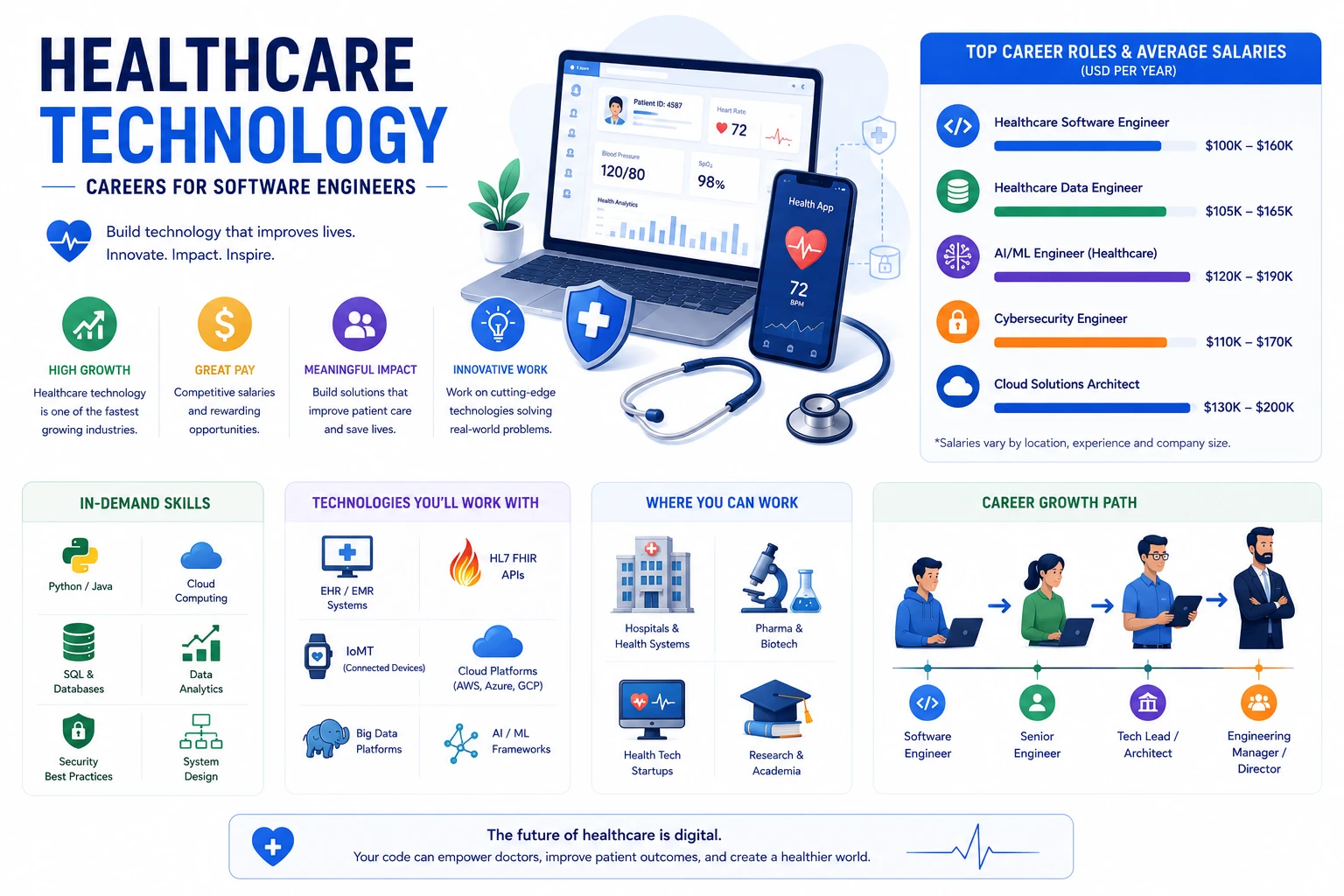
Healthcare technology continues to grow due to telemedicine, digital health platforms, wearable devices, and AI-assisted diagnostics.
Software engineers in healthcare build:
- Electronic health record systems
- Telemedicine platforms
- Patient portals
- Medical imaging tools
- Healthcare analytics systems
- Diagnostic software
- Health monitoring platforms
Healthcare technology offers a unique combination of:
- Long-term stability
- Meaningful work
- Growing demand
- Strong compensation
- Large-scale systems experience
Many developers find healthcare work more fulfilling because the software directly impacts patient care and medical outcomes.
The industry also benefits from strong long-term demand due to aging populations and continued healthcare digitization.
Healthcare engineering requires a strong focus on:
- Security
- Privacy
- Compliance
- Data integrity
- Reliability
Regulations slow development cycles compared to startups, but they also create stability.
Unlike industries driven by trends or consumer behavior, healthcare systems remain essential.
This field works well for software engineers seeking:
- Stable careers
- Mission-driven work
- Predictable environments
- Long-term demand
Major healthcare technology companies include:
- entity[“company”, “Epic Systems”, “Healthcare software company”]
- entity[“company, “Teladoc Health “, “Telemedicine company”]
- entity[“company”, “Cerner”,” Healthcare information technology company”]
- entity[“company”, “Philips”, “Health technology company”]
Enterprise SaaS Is One of the Best Industries for Remote Software Engineers
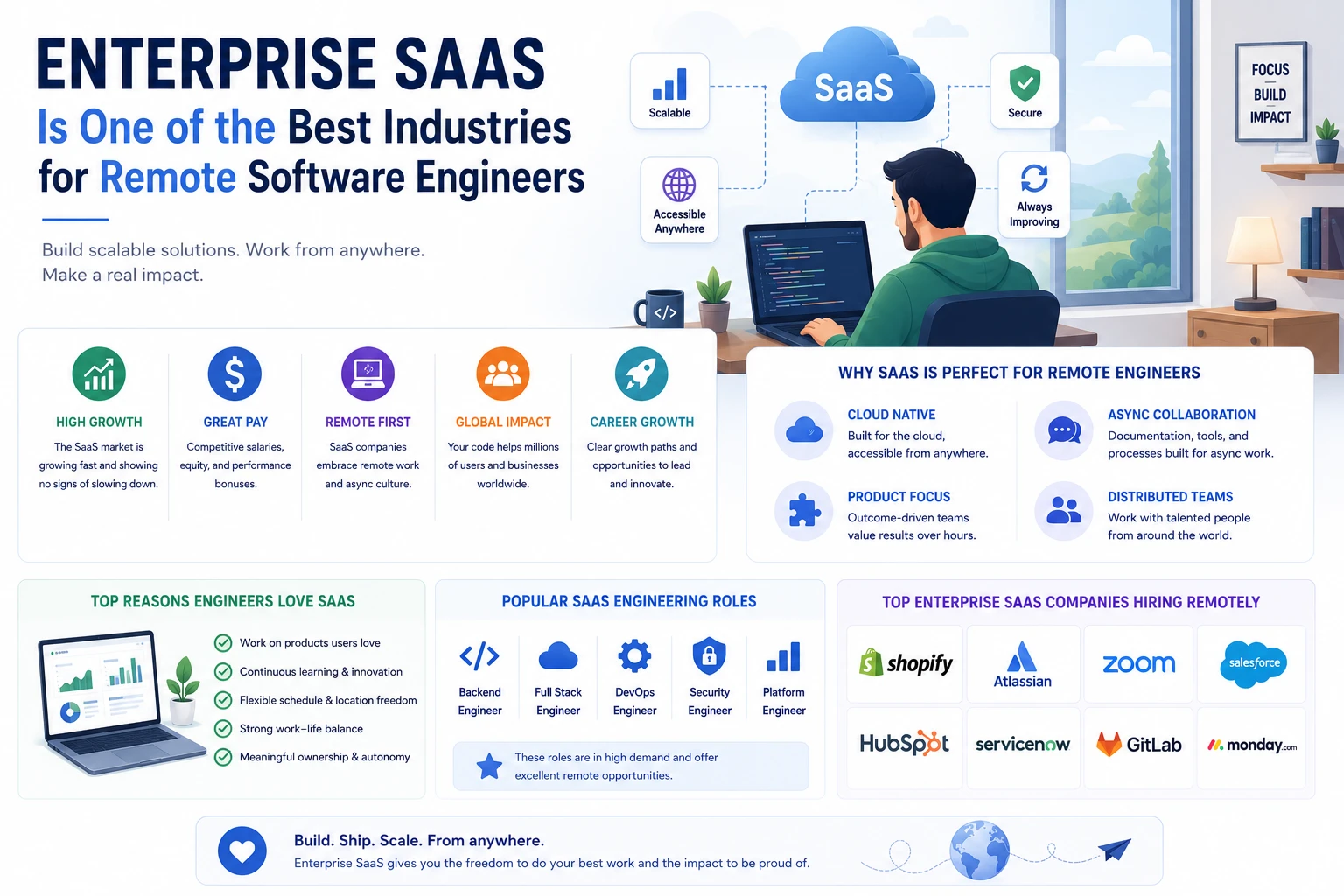
Enterprise SaaS remains one of the safest and most balanced industries for software engineers.
These companies create software used by businesses every day.
Examples include:
- CRM platforms
- Collaboration tools
- Analytics dashboards
- Marketing platforms
- HR systems
- Workflow automation software
Software engineers in SaaS companies often work across:
- Full-stack development
- Backend APIs
- Cloud infrastructure
- Product engineering
- Database optimization
- Frontend systems
One major advantage of enterprise SaaS is work-life balance.
Compared to industries like gaming or trading systems, SaaS companies often maintain more sustainable engineering cultures.
Many SaaS companies also support:
- Remote work
- Flexible schedules
- Distributed teams
- Asynchronous communication
This makes enterprise SaaS one of the best industries for remote software engineers.
The business models are usually stable because subscription revenue creates predictable income.
That stability often translates into:
- Reliable hiring
- Better planning
- Lower burnout
- Strong engineering processes
The downside is that some SaaS engineering work may feel less exciting compared to AI research or advanced graphics systems.
Still, for developers prioritizing consistency, compensation, and remote flexibility, enterprise SaaS remains a top career choice.
Major SaaS companies include:
- entity[“company”, Salesforcee”, “Enterprise cloud software company”]
- entity[” company”, “A tlassian”,” Collaboration software company”]
- entity [“company “, “HubSpot”, “CRM and marketing software company”]
- entity[“company”,” ServiceNow “, “Enterprise workflow automation company”]
Gaming and Interactive Entertainment
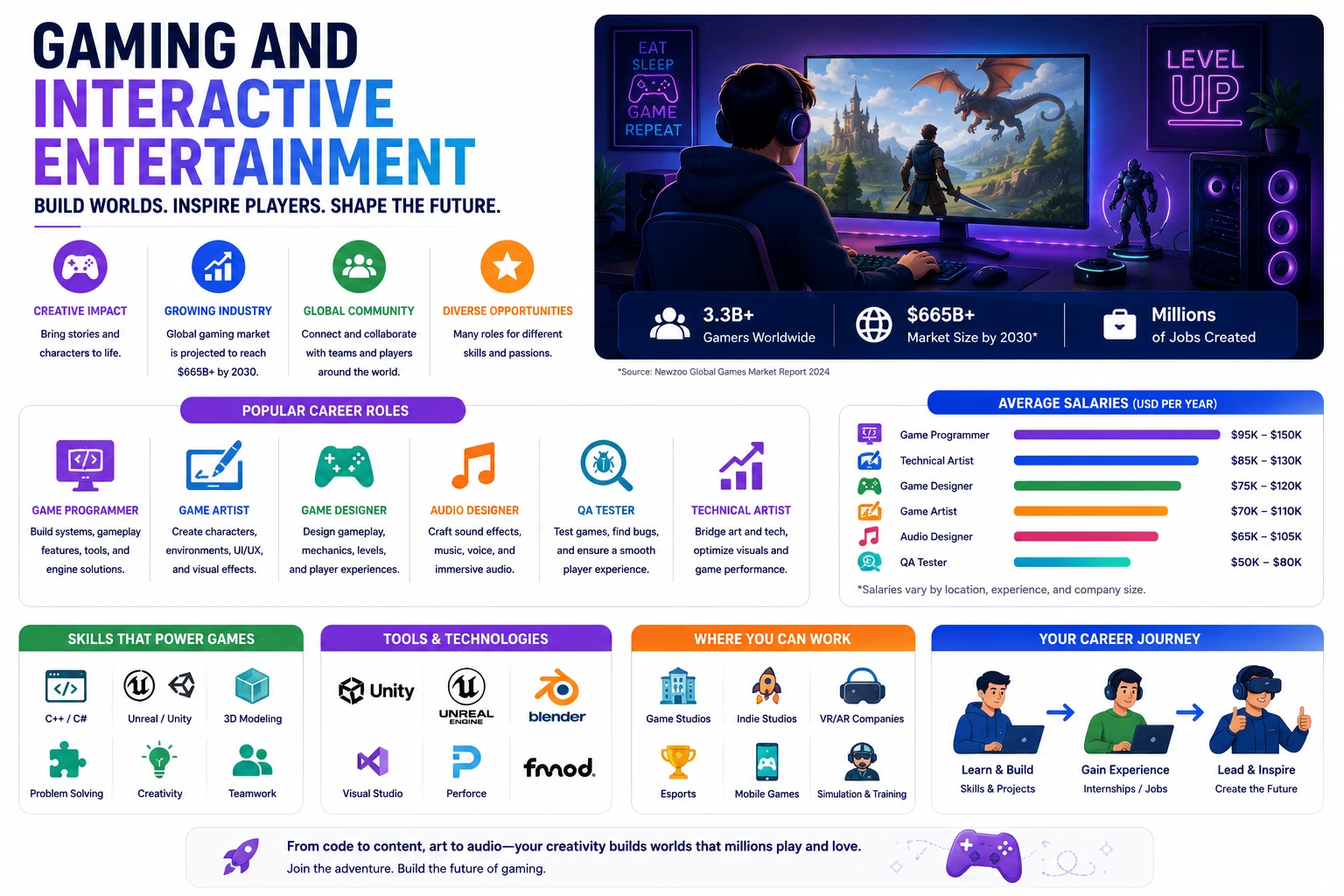
Gaming remains one of the most technically demanding industries for software engineers.
Developers in gaming work on:
- Rendering systems
- Multiplayer networking
- Real-time optimization
- AI behavior systems
- Graphics engines
- Physics systems
- Virtual reality platforms
This industry attracts engineers who enjoy creativity and performance optimization.
Gaming engineers often use:
- C++
- Unreal Engine
- Unity
- GPU optimization tools
- Real-time networking systems
The technical challenges are impressive because games must maintain smooth performance while processing enormous amounts of data in real time.
Engineers often solve difficult problems involving:
- Memory optimization
- Graphics rendering
- Server scaling
- Real-time synchronization
Gaming also provides strong portfolio value because developers gain experience with highly optimized systems.
The downside is work-life balance.
The gaming industry has a long reputation for crunch periods and demanding release schedules. Compensation may also fall below top AI or cloud infrastructure roles.
Still, many engineers choose gaming because they care deeply about interactive entertainment and creative technology.
Major gaming companies include:
- entity[“company,” Epic Games, “Video game and software developer”]
- entity[“company”, “Electronic Arts”, “Video game company”]
- entity[ “comp any”, “Ubi soft”, “Video game publisher”]
- entity[“company”, “Riot Games”,”Video game developer and esports company”]
Best Industries for Entry-Level Software Engineers
Entry-level developers should focus on industries that provide:
- Strong mentorship
- Modern engineering practices
- Exposure to scalable systems
- Long-term skill growth
- Stable hiring demand
The best industries for beginner software engineers include:
| Industry | Why It’s Good for Beginners |
|---|---|
| Enterprise SaaS | Strong mentorship and full-stack exposure |
| Cloud Computing | Excellent infrastructure experience |
| E-commerce | High-volume production systems |
| Healthcare Tech | Stable environments and long-term growth |
| Fintech | Strong backend engineering experience |
AI companies can be difficult for junior engineers because hiring standards are often extremely competitive.
SaaS and cloud-focused companies usually provide the best balance between learning opportunities and career accessibility.
Explore our guide, Software Development Analyst: Role, Salary & Career, for a clear breakdown of the job, required skills, salary, and career opportunities.
Future-Proof Industries for Software Engineers
Some industries will continue growing for decades because they support essential infrastructure and long-term technology trends.
The most future-proof software engineering industries include:
- Artificial intelligence
- Cybersecurity
- Cloud infrastructure
- Healthcare technology
- Automation platforms
- Enterprise software
These sectors benefit from:
- Long-term investment
- Global demand
- Enterprise adoption
- Infrastructure dependence
- Continuous digital transformation
Developers entering these industries now position themselves for strong long-term career stability.
How to Choose the Right Industry as a Software Engineer
The best industry depends on your personal goals.
Choose AI or cloud infrastructure if you want:
- Maximum compensation
- Fast career growth
- Advanced technical challenges
Choose enterprise SaaS or healthcare technology if you want:
- Better work-life balance
- Stable employment
- Long-term predictability
Choose fintech or cybersecurity if you enjoy:
- High-performance systems
- Infrastructure engineering
- Security-focused development
Choose gaming if you prioritize:
- Creative work
- Real-time systems
- Graphics engineering
Software engineering careers are rarely linear. Many developers move between industries throughout their careers.
The most important factor is building transferable skills:
- Backend development
- Cloud infrastructure
- Distributed systems
- APIs
- Security fundamentals
- Scalability knowledge
Those skills remain valuable across nearly every major industry.
Final Thoughts
The best industries for software engineers in 2026 combine strong hiring demand, scalable technology, and long-term business growth.
AI, fintech, cybersecurity, cloud computing, healthcare technology, and enterprise SaaS continue leading the market because companies depend heavily on software infrastructure and digital transformation.
Each industry offers different advantages.
AI and cloud infrastructure provide exceptional compensation and technical depth. Saaa S and healthcaa re offer a stronger work-life balance and stability. Cybersecurity delivers long-term demand, while gaming attracts developers passionate about creative technology.
The strongest career strategy is choosing industries that:
- Continue growing
- Invest heavily in technology
- Solve real infrastructure problems
- Need scalable engineering talent
Software engineering remains one of the most flexible and future-proof careers available, especially for developers who continuously adapt their skills to evolving industries.
Frequently Asked Questions
AI, cloud computing, and fintech typically offer the highest salaries for software engineers, especially at senior levels and infrastructure-focused roles.
Enterprise SaaS, cloud computing, and cybersecurity companies often provide the strongest remote work opportunities and distributed engineering cultures.
Yes. Healthcare technology offers strong job stability, meaningful work, and long-term demand due to continued healthcare digitization.
Enterprise SaaS, cloud computing, and e-commerce companies are excellent starting points because they expose junior developers to modern engineering workflows and scalable systems.
Artificial intelligence, cybersecurity, cloud infrastructure, and healthcare technology are considered the most future-proof industries because global demand continues to increase in these sectors.