

 Post by
 For years, aspiring developers believed a computer science degree was the only path into software engineering. That assumption is changing quickly. Today, thousands of self-taught developers, coding bootcamp graduates, and career changers are building successful careers without ever earning a traditional four-year degree.
If you’re wondering about the software developer salary without degree, the short answer is encouraging: many employers now prioritize technical ability, practical experience, and problem-solving skills over formal education. While a degree can help you get your first interview, it is no longer the deciding factor for many technology companies.
The rise of remote work, open-source contributions, GitHub portfolios, online learning platforms, and skills-based hiring has created more opportunities than ever for developers without university degrees. Whether you want to work for a startup, a Fortune 500 company, or as a freelancer, your earning potential depends far more on the value you bring than the diploma hanging on your wall.
Read More On Best Colleges for Software Development in 2026
Can You Become a Software Developer Without a Degree?
Absolutely.
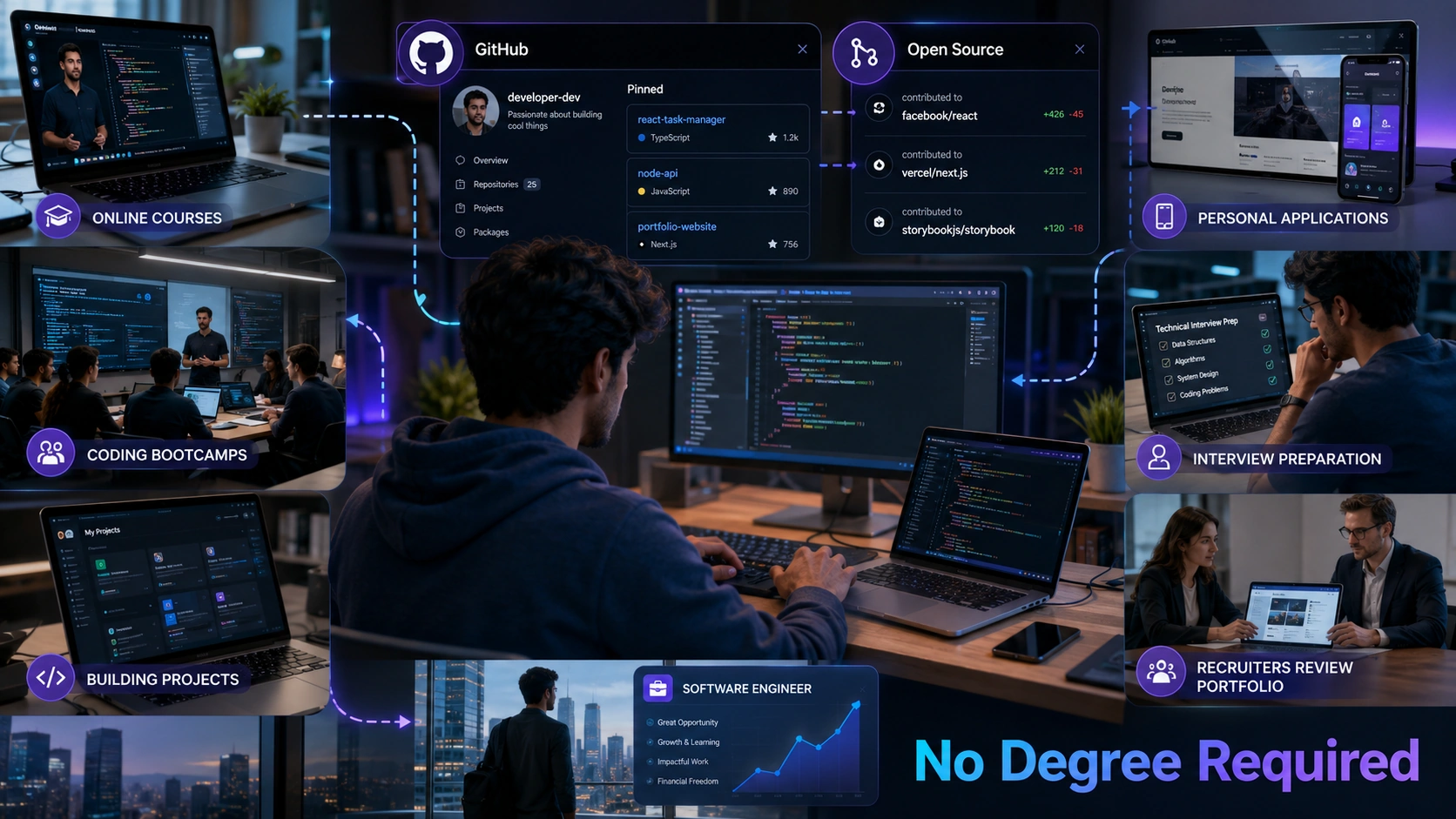
Many employers have shifted toward skills-first hiring, especially in software development. Companies understand that exceptional programmers come from many backgrounds, including self-learning, coding bootcamps, vocational training, and open-source communities.
Unlike many professions, software development is one of the few careers where employers can directly evaluate your abilities. Your code either works or it doesn’t. That makes portfolios, technical interviews, and real-world projects much more valuable than academic credentials alone.
Today’s hiring managers often look for evidence that you can solve problems rather than simply complete coursework.
Employers typically value:
- Strong GitHub repositories
- Personal software projects
- Open-source contributions
- Internship experience
- Freelance work
- Technical interview performance
- Communication skills
- Ability to learn quickly
Someone who has built five production-ready applications often has a stronger portfolio than someone who only completed university assignments.
This shift has opened doors for career changers, military veterans, bootcamp graduates, and self-taught developers worldwide.
Why Skills Matter More Than Degrees
Software engineering evolves rapidly. New programming languages, frameworks, and cloud technologies emerge every year. Universities often struggle to update their curriculum at the same pace.
Employers know this.
Instead of asking, “Where did you study?” many now ask:
- Can you build scalable APIs?
- Can you debug production issues?
- Can you design efficient databases?
- Can you collaborate using Git?
- Can you deploy applications to the cloud?
These practical skills directly impact business outcomes, making them stronger indicators of future performance than academic transcripts.
A degree may help you enter the industry, but continuous learning keeps you competitive throughout your career.
Average Software Developer Salary Without Degree
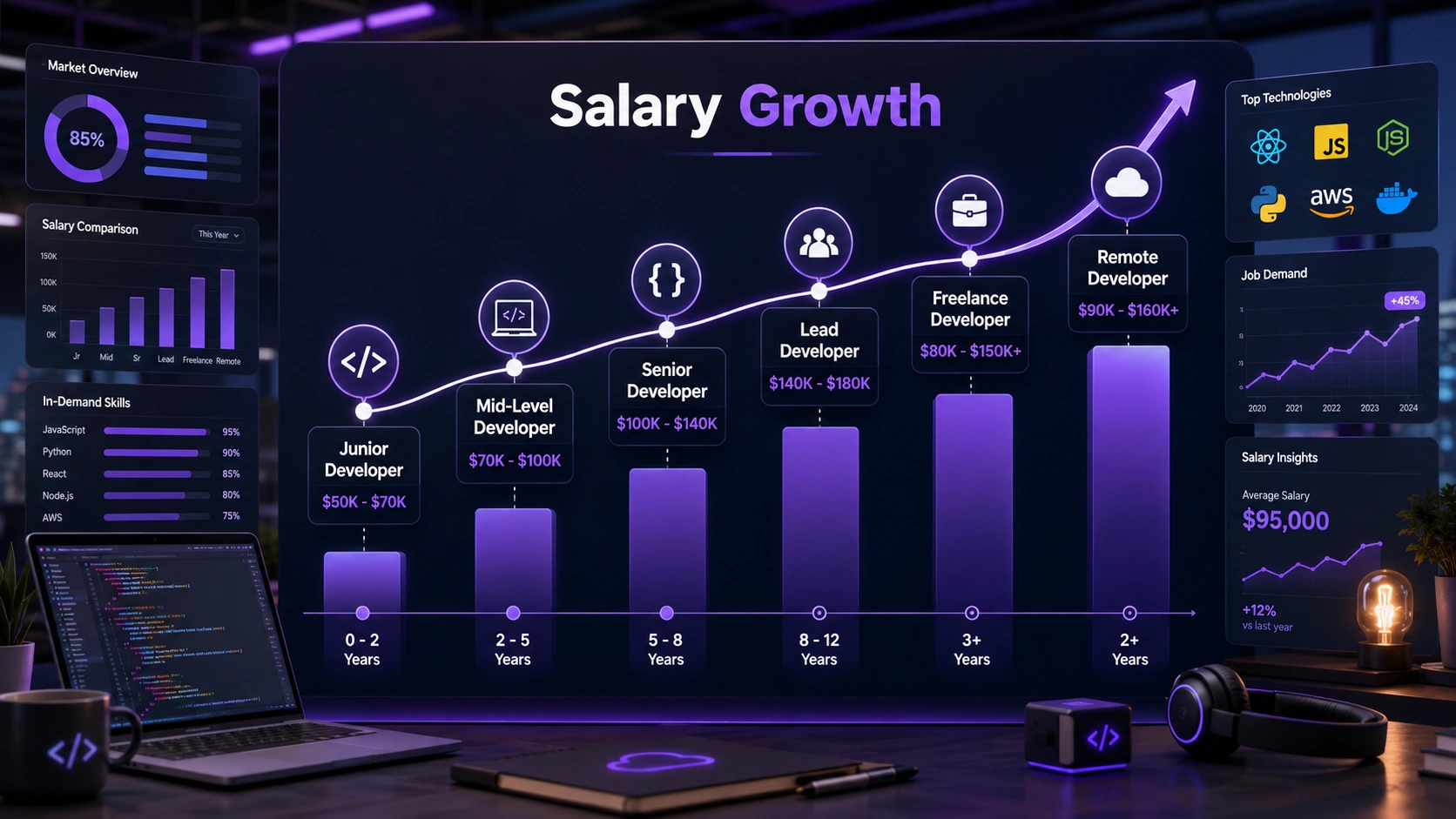
Your salary depends on multiple factors, including experience, location, specialization, company size, and technical expertise.
The table below provides approximate annual salary ranges.
| Experience Level | Approximate Salary (USD) |
|---|---|
| Junior Developer (0–2 years) | $55,000–$85,000 |
| Mid-Level Developer (3–5 years) | $85,000–$125,000 |
| Senior Developer (6–10 years) | $120,000–$170,000 |
| Lead Developer | $150,000–$220,000+ |
| Freelance Developer | Varies widely based on clients |
| Remote International Developer | Depends on employer and country |
These figures are estimates and vary significantly based on region, company, specialization, and market demand.
Many developers without degrees earn salaries comparable to graduates after gaining several years of professional experience.
What Affects a Software Developer’s Salary?
Your education is only one variable among many.
The following factors usually have a much greater impact on your compensation:
Experience
Professional experience remains one of the strongest salary drivers. Developers who consistently deliver successful projects naturally command higher compensation.
Programming Languages
Some programming languages have higher market demand, leading to better salaries.
Cloud Skills
Experience with AWS, Azure, or Google Cloud often increases earning potential because many businesses are migrating to cloud infrastructure.
System Design
Senior developers capable of designing scalable systems often earn significantly more than developers focused only on coding.
Location
Developers working in cities with strong technology industries or remote positions for international companies generally receive higher salaries.
Industry
Finance, cybersecurity, artificial intelligence, healthcare, and enterprise SaaS frequently offer higher compensation than smaller local businesses.
Portfolio Quality
A strong portfolio demonstrates practical ability and often helps candidates stand out during hiring.
Degree vs No Degree Salary Comparison
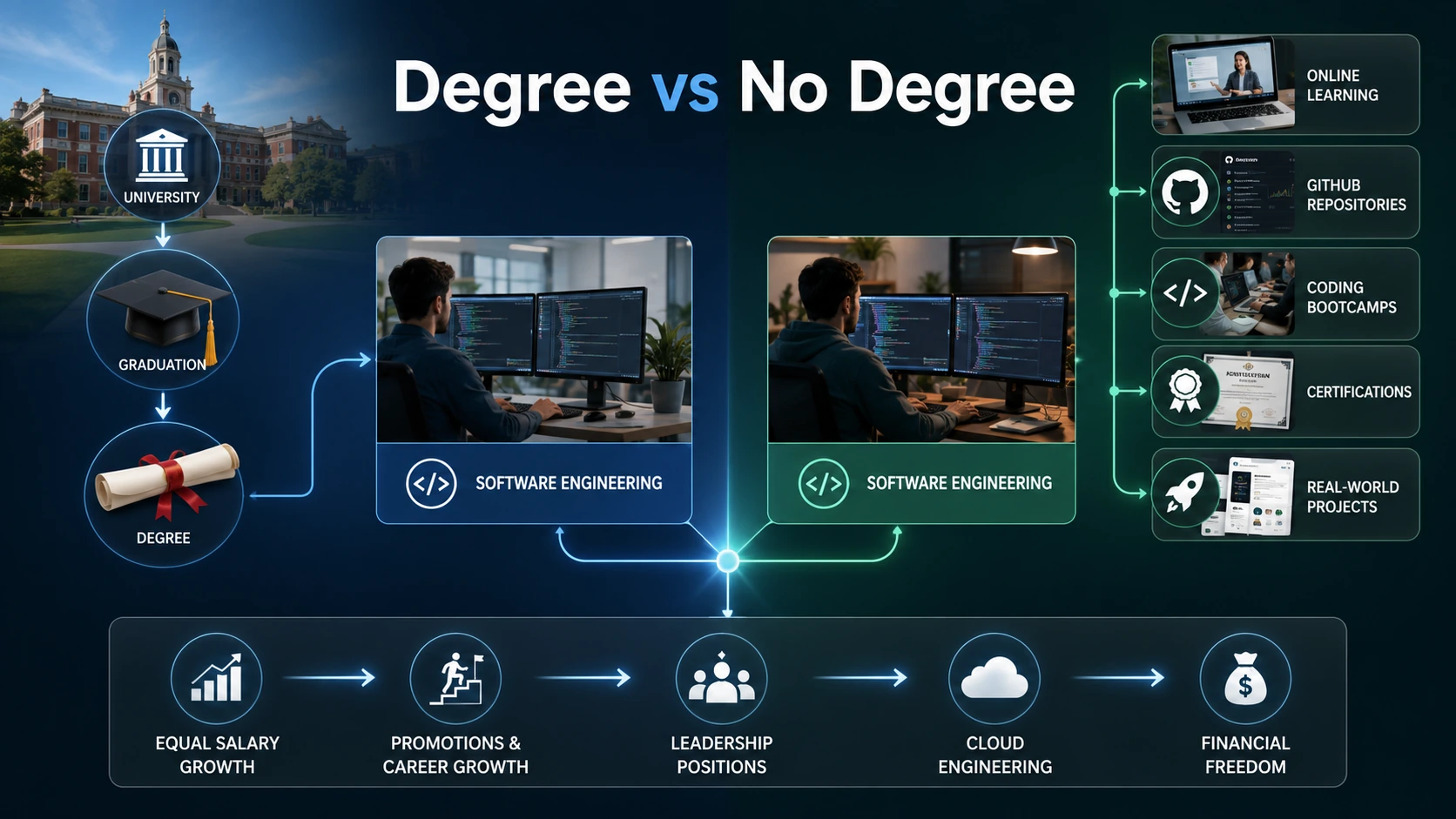
One of the biggest concerns for aspiring developers is whether not having a degree will permanently limit their earning potential.
The answer is: not necessarily.
A computer science degree can make it easier to land your first job because it signals foundational knowledge. However, once you’ve gained professional experience, most employers place much greater emphasis on what you’ve built, the technologies you’ve mastered, and the impact you’ve had on previous projects.
After three to five years in the industry, your portfolio, work history, certifications, and technical interview performance often matter more than your educational background.
Degree vs No Degree Comparison
| Factor | Computer Science Degree | No Degree (Self-Taught/Bootcamp) |
|---|---|---|
| First Job Opportunities | Easier initial access | May require a stronger portfolio |
| Starting Salary | Slightly higher in some companies | Competitive with the right skills |
| Promotion Speed | Based on performance | Based on performance |
| Long-Term Salary | High | Equally high with experience |
| Leadership Roles | Available | Available with proven expertise |
| Skill Expectations | Academic fundamentals | Practical, job-ready skills |
| Portfolio Importance | Helpful | Essential |
| Continuous Learning | Required | Required |
The largest salary difference usually appears at the beginning of a career. Employers hiring junior developers often use a degree as one factor when evaluating candidates with little experience.
As your career progresses, that gap tends to shrink. A developer with five years of experience building production applications is often evaluated similarly regardless of whether they learned through university or self-study.
Many hiring managers are more interested in answers to questions such as:
- Have you designed scalable applications?
- Can you solve complex technical problems?
- Have you worked in Agile teams?
- Can you mentor junior developers?
- Have you successfully delivered production software?
If the answer is yes, your educational background becomes less significant.
Why Experience Eventually Matters More
Software development is a results-driven profession. Businesses hire developers to solve problems, improve products, and deliver reliable software. They care less about where you learned and more about whether you can contribute effectively.
For example:
- A self-taught developer who has deployed multiple SaaS applications to AWS may be more valuable than a graduate with limited practical experience.
- An experienced freelancer who has completed projects for dozens of clients may possess stronger real-world skills than someone with only academic projects.
- An engineer who regularly contributes to open-source software demonstrates initiative, collaboration, and technical ability that employers highly value.
This is why many senior developers without degrees earn salaries comparable to or even higher than their peers with traditional academic backgrounds.
Situations Where a Degree Can Still Help
Although the industry is becoming more skills-focused, a degree can still provide advantages in some situations:
- Government or public-sector jobs with formal education requirements
- Companies with strict HR hiring policies
- Graduate training programs
- Work visa or immigration processes in certain countries
- Research-focused or highly specialized engineering roles
These requirements are becoming less common in many parts of the technology industry, but they still exist in some organizations.
Focus on What You Can Control
Instead of worrying about whether you have a degree, invest your time in areas that directly improve your market value:
- Build real applications
- Learn modern frameworks
- Master Git and GitHub
- Understand databases and APIs
- Gain cloud computing experience
- Contribute to open-source projects
- Practice coding interviews
- Develop strong communication skills
These achievements often have a greater impact on your salary than formal education alone.
Highest Paying Programming Languages
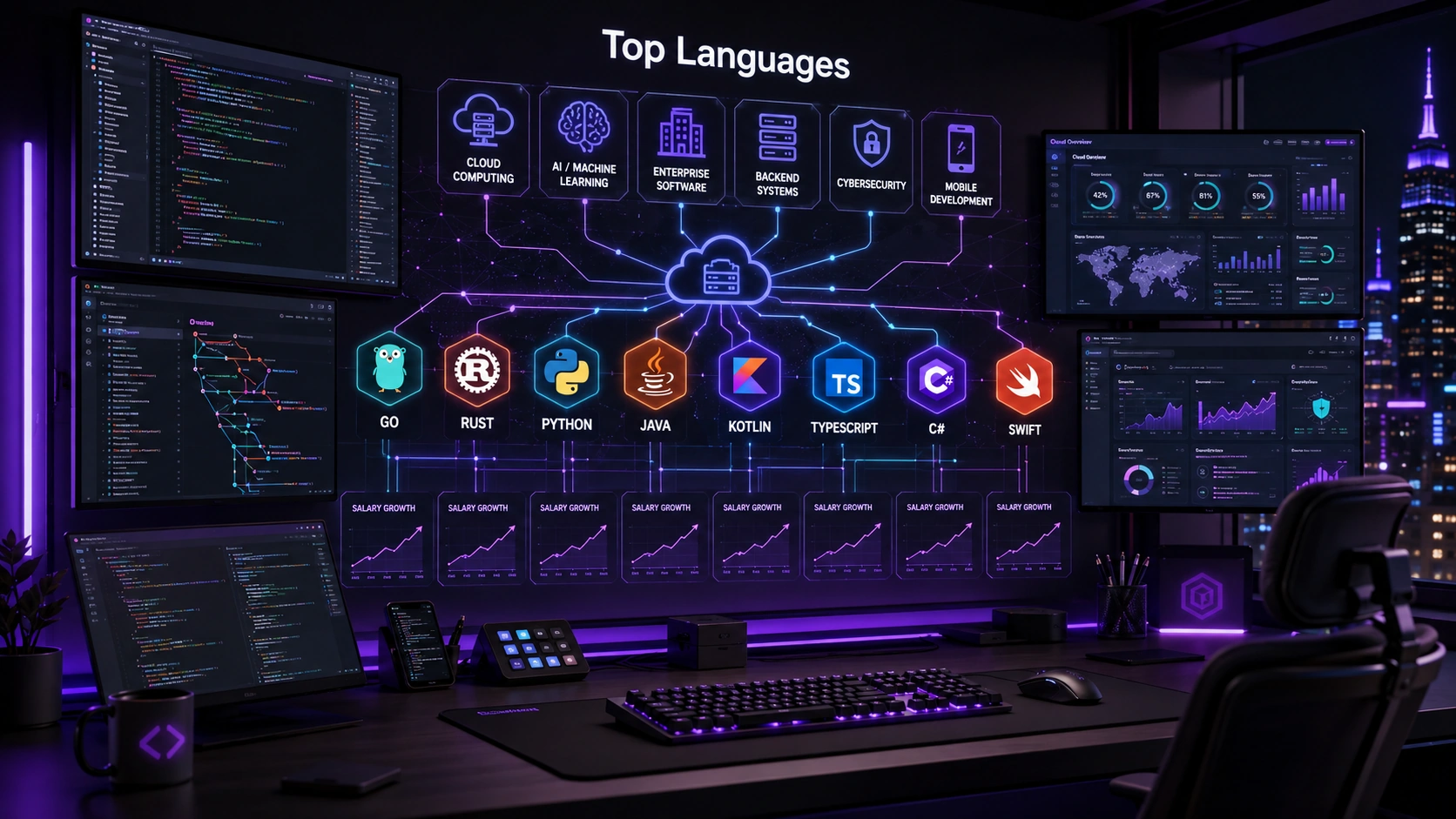
Not all programming languages offer the same earning potential. Salaries are largely driven by market demand, the complexity of the technology, and the industries where the language is commonly used.
Developers who specialize in modern, high-demand languages often receive better compensation than generalists with outdated skill sets.
| Programming Language | Common Use Cases | Salary Potential |
|---|---|---|
| Go (Golang) | Cloud platforms, DevOps, backend systems | Very High |
| Rust | Systems programming, security, blockchain | Very High |
| Python | AI, automation, data science, backend | High |
| Kotlin | Android development, backend | High |
| TypeScript | Modern web applications | High |
| Java | Enterprise software, banking | High |
| C# | Microsoft ecosystem, enterprise apps | High |
| Swift | iOS application development | High |
While choosing a high-paying language can boost your earning potential, remember that employers typically hire developers for their ability to solve business problems not just their familiarity with a specific language.
Learning software architecture, cloud platforms, databases, and system design alongside your preferred language will usually have a greater impact on your long-term salary than learning another programming language alone.
Skills That Increase Developer Salary
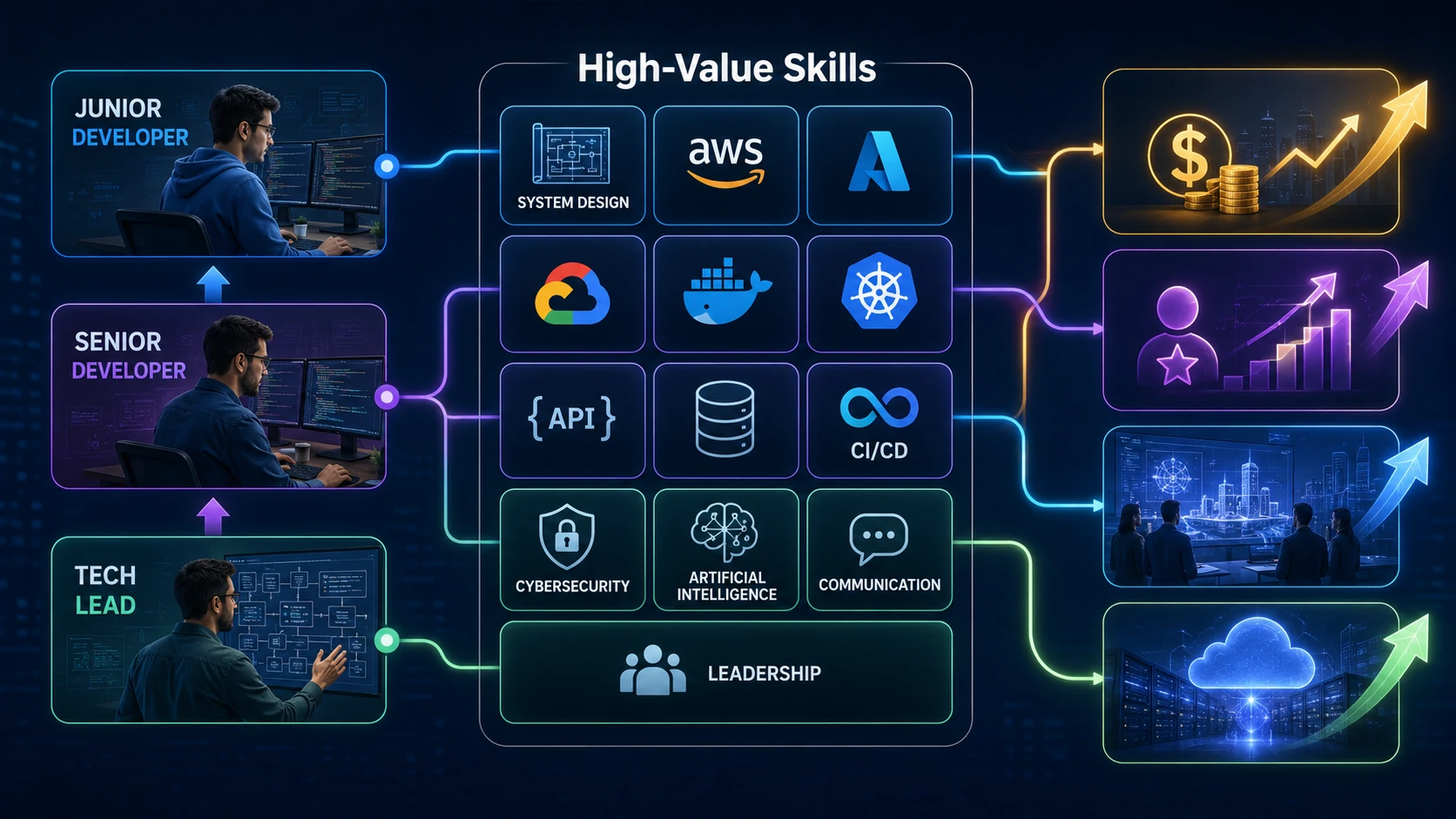
Learning a programming language is only the beginning of a successful software development career. As you gain experience, employers expect you to solve increasingly complex problems, collaborate across teams, and build reliable software that can scale. These advanced skills often have a much greater impact on your earning potential than whether you have a college degree.
If your goal is to maximize your software developer salary without degree, focus on developing high-value technical and professional skills that businesses are willing to pay for.
1. System Design
Junior developers usually focus on writing features, while senior developers are expected to design systems that remain fast, secure, and scalable as users grow.
Understanding concepts such as load balancing, caching, microservices, message queues, and database optimization makes you a stronger candidate for higher-paying mid-level and senior roles.
2. Cloud Computing
Most modern applications run on cloud platforms instead of physical servers.
Experience with services such as:
- Amazon Web Services (AWS)
- Microsoft Azure
- Google Cloud Platform (GCP)
can significantly increase your market value. Employers actively seek developers who understand cloud deployments, storage, networking, monitoring, and serverless computing.
3. Docker and Kubernetes
Containers have become the standard for deploying software consistently across environments.
Knowing how to:
- Create Docker images
- Manage containers
- Deploy applications with Kubernetes
- Scale containerized workloads
can make you more attractive for backend and DevOps-focused positions.
4. API Development
Modern applications constantly exchange data through APIs.
Developers who can design and build secure, well-documented RESTful or GraphQL APIs are in high demand across startups and enterprise organizations.
Understanding authentication, rate limiting, versioning, and API security adds even more value.
5. Database Management
Nearly every software application relies on data.
Employers expect developers to understand both SQL and NoSQL databases, including:
- PostgreSQL
- MySQL
- SQL Server
- MongoDB
- Redis
Knowing how to optimize queries and design efficient database schemas can improve application performance and increase your earning potential.
6. Cybersecurity Fundamentals
Security is no longer the sole responsibility of dedicated security teams.
Developers who understand:
- Secure authentication
- Input validation
- SQL injection prevention
- Cross-site scripting (XSS)
- Encryption
- Secure coding practices
help organizations reduce security risks and build more resilient applications.
7. CI/CD and Automation
Companies release software frequently, sometimes multiple times a day.
Understanding Continuous Integration and Continuous Deployment (CI/CD) tools such as GitHub Actions, GitLab CI/CD, Azure DevOps, or Jenkins allows you to automate testing and deployments, making you a more valuable engineer.
8. Artificial Intelligence Integration
AI is becoming part of everyday software development.
Developers who can integrate AI services, build AI-powered features, or work with APIs from providers like OpenAI, Anthropic, or Google are increasingly sought after.
Even basic knowledge of prompt engineering and AI-assisted application development can differentiate you from other candidates.
9. Communication Skills
Technical ability alone isn’t enough.
Senior developers spend a significant amount of time:
- Explaining technical concepts
- Reviewing code
- Mentoring teammates
- Collaborating with designers and product managers
- Presenting solutions to stakeholders
Strong communication often accelerates promotions and salary growth.
10. Leadership and Ownership
The highest-paid developers don’t simply complete assigned tasks. They take ownership of projects, identify improvements, and help their teams succeed.
Leadership can include:
- Mentoring junior developers
- Leading technical discussions
- Improving development processes
- Making architectural decisions
- Coordinating releases
These responsibilities often come with higher compensation and faster career progression.
High-Income Skills at a Glance
| Skill | Salary Impact |
|---|---|
| System Design | Very High |
| Cloud Computing (AWS, Azure, GCP) | Very High |
| Docker & Kubernetes | High |
| API Development | High |
| Database Optimization | High |
| Cybersecurity | High |
| CI/CD Automation | High |
| AI Integration | Very High |
| Communication | High |
| Leadership | Very High |
The most successful developers combine technical expertise with business understanding and strong interpersonal skills. This combination often leads to higher salaries than technical knowledge alone.
Companies That Hire Developers Without Degrees
A growing number of technology companies have moved toward skills-based hiring, recognizing that talented developers come from a variety of educational backgrounds.
While hiring policies differ by role and location, many employers no longer require a traditional computer science degree for software engineering positions. Instead, they evaluate candidates based on coding ability, problem-solving skills, portfolios, and professional experience.
Here are some well-known companies that have publicly embraced skills-focused hiring for many technical roles:
| Company | Degree Required?* | What They Typically Value |
|---|---|---|
| Not always | Technical interviews, problem-solving, experience | |
| IBM | Many roles are skills-based | Certifications, practical skills, experience |
| Apple | Many engineering roles don’t require a degree | Portfolio, technical ability |
| Meta | Depends on the role | Coding interviews, system design, impact |
| GitHub | Often skills-focused | Open-source contributions, collaboration |
| GitLab | Yes for many remote roles | Remote experience, Git expertise |
| Shopify | Skills-first culture | Real-world projects, product thinking |
| Automattic | Strongly skills-based | Writing, communication, coding ability |
*Hiring requirements vary by country, department, and individual role.
What These Companies Look For Instead
Even if a degree isn’t required, employers expect candidates to demonstrate their capabilities through tangible evidence.
A strong application often includes:
- An active GitHub profile with quality projects
- Experience building real applications
- Clean, maintainable code
- Knowledge of modern development tools
- Strong problem-solving ability
- Good communication and teamwork
- Continuous learning through certifications or personal projects
For many hiring managers, a well-maintained portfolio showcasing practical work is far more persuasive than a degree listed on a résumé.
The takeaway is simple: if you can prove your skills and deliver results, many employers are willing to look beyond formal education.
Freelance vs Full-Time Salary
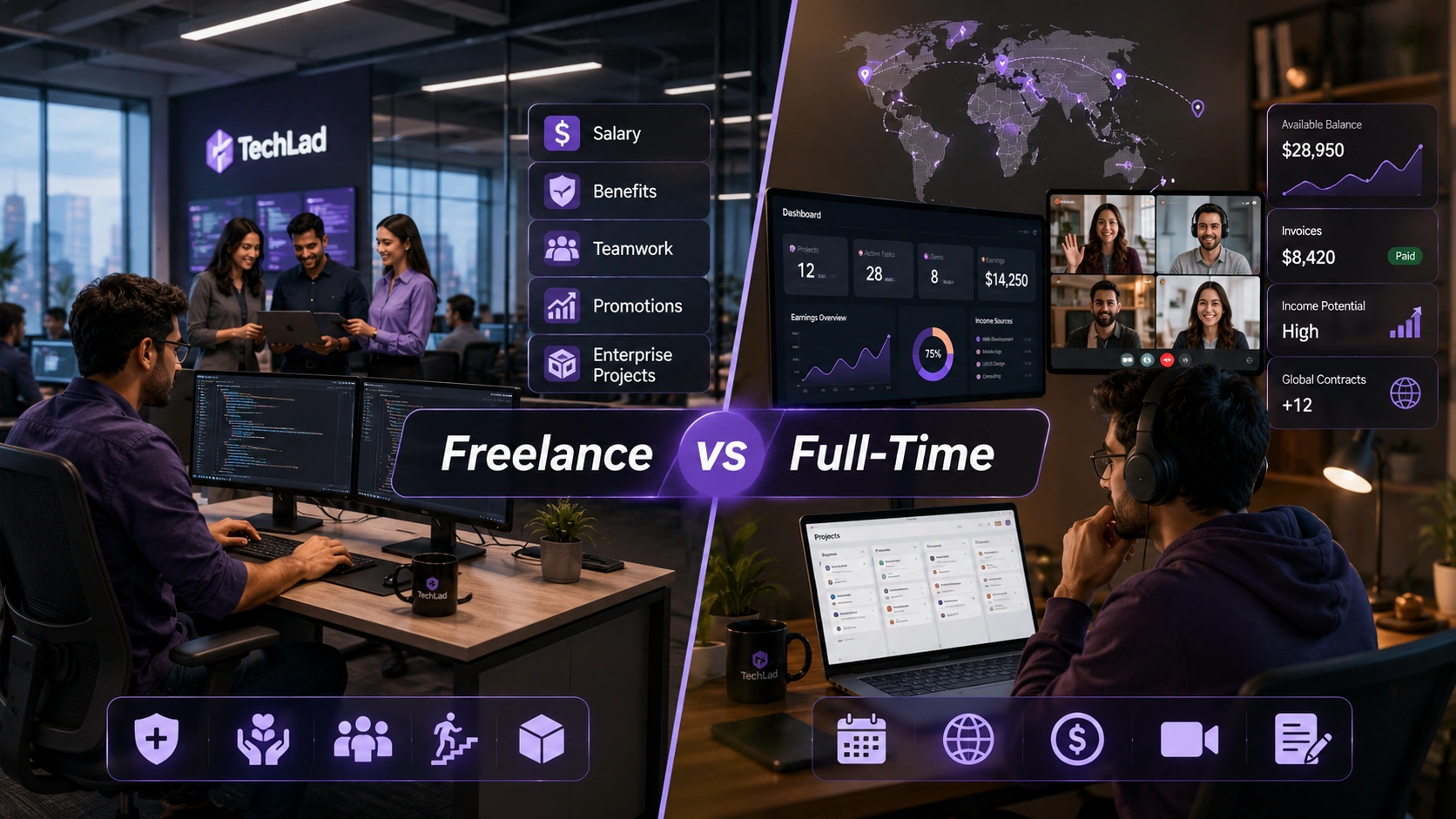
One of the biggest advantages of learning software development without a degree is the flexibility to choose how you work. Some developers prefer the stability of a full-time job, while others pursue freelancing or contract work to increase their income and enjoy greater independence.
Neither option is inherently better. The right choice depends on your career goals, financial needs, and preferred work style.
Full-Time Software Developer
Working as a full-time developer offers predictable income, structured career growth, and access to benefits that freelancers often have to manage themselves.
Most companies also provide opportunities to work on large-scale systems, collaborate with experienced engineers, and receive mentorship that accelerates professional growth.
Advantages
- Stable monthly salary
- Health insurance and retirement benefits
- Paid vacation and holidays
- Mentorship from senior engineers
- Clear promotion path
- Access to enterprise-level projects
Challenges
- Less flexibility
- Fixed working hours
- Salary increases may be gradual
- Limited control over project selection
Freelance Software Developer
Freelancers work directly with clients, either independently or through platforms and agencies. Income can vary significantly from month to month, but experienced freelancers often earn more than full-time employees by serving multiple clients.
Success in freelancing depends on both technical expertise and business skills, such as communication, marketing, pricing, and client management.
Advantages
- Higher income potential
- Flexible schedule
- Freedom to choose projects
- Ability to work from anywhere
- Opportunity to build a personal brand
Challenges
- No guaranteed monthly income
- Finding clients takes effort
- Responsible for taxes and insurance
- Managing contracts and invoices
- Handling multiple deadlines
Freelance vs Full-Time Comparison
| Factor | Full-Time Employment | Freelancing |
|---|---|---|
| Income Stability | High | Variable |
| Salary Growth | Predictable | Depends on clients and rates |
| Benefits | Usually included | Self-managed |
| Work Flexibility | Moderate | High |
| Remote Opportunities | Increasing | Very High |
| Career Progression | Structured | Self-directed |
| Financial Risk | Low | Higher |
| Income Potential | High | Very High for experienced developers |
Many developers begin their careers in full-time roles to gain experience and later transition into freelancing once they have built a strong reputation and network.
How to Increase Your Salary Without a Degree
Not having a degree does not prevent you from earning an excellent income. What matters is consistently increasing your value in the job market.
Here are proven ways to boost your earning potential.
Build a Strong GitHub Portfolio
A GitHub profile is often the first thing recruiters and hiring managers review after your résumé.
Instead of uploading small tutorial projects, focus on building applications that solve real problems.
Examples include:
- Task management applications
- E-commerce platforms
- REST APIs
- AI-powered tools
- Portfolio websites
- Automation scripts
Quality matters more than quantity.
Create Real-World Projects
Employers want evidence that you can build production-ready software.
Consider projects such as:
- Expense tracker
- CRM system
- Booking application
- Chat application
- Inventory management software
- SaaS dashboard
These projects demonstrate practical experience that closely matches workplace requirements.
Contribute to Open Source
Open-source contributions show that you can collaborate with other developers, understand existing codebases, and work using professional development workflows.
Even fixing documentation, resolving bugs, or adding small features demonstrates initiative and teamwork.
Learn In-Demand Technologies
Technology changes rapidly, and developers who stay current often earn higher salaries.
Focus on learning areas such as:
- React
- Next.js
- Node.js
- .NET
- Spring Boot
- AWS
- Azure
- Docker
- Kubernetes
- AI development
- Cybersecurity fundamentals
Avoid relying solely on older technologies unless your industry specifically requires them.
Earn Relevant Certifications
While certifications don’t replace experience, they can strengthen your résumé and demonstrate commitment to learning.
Popular certifications include:
- AWS Certified Developer
- Microsoft Azure Developer Associate
- Google Cloud certifications
- Docker certifications
- Kubernetes certifications
Cloud certifications are particularly valuable because cloud expertise remains in high demand.
Improve Technical Interview Skills
Many talented developers fail interviews because they lack preparation.
Practice:
- Data structures
- Algorithms
- System design
- Behavioral questions
- Coding challenges
- Communication during problem-solving
Mock interviews can significantly improve confidence and performance.
Negotiate Every Job Offer
Many candidates accept the first salary offered.
Research market rates, highlight your achievements, and confidently negotiate based on the value you bring.
Even a modest increase in your starting salary can have a significant impact on your lifetime earnings.
Change Jobs Strategically
While loyalty is valuable, changing employers every few years can often result in larger salary increases than relying solely on annual raises.
Before switching jobs, ensure you’ve gained meaningful skills and accomplishments that justify higher compensation.
Build a Personal Brand
A professional online presence can attract recruiters without you actively applying.
Consider sharing:
- Technical blogs
- LinkedIn posts
- GitHub projects
- Open-source contributions
- Conference presentations
- YouTube tutorials
Being visible within the developer community increases career opportunities.
Network Consistently
Many high-paying opportunities are filled through professional connections rather than public job boards.
Attend:
- Developer meetups
- Technology conferences
- Hackathons
- Online communities
- LinkedIn networking events
Building relationships can open doors to roles that aren’t widely advertised.
Common Mistakes That Keep Salaries Low
Many developers focus only on writing code while overlooking habits that significantly influence long-term earning potential.
Avoid these common mistakes.
Learning Only Through Tutorials
Watching endless tutorials creates the illusion of progress.
Real growth happens when you build projects independently and solve unfamiliar problems.
Having a Weak Portfolio
A résumé without meaningful projects gives employers little evidence of your abilities.
Aim to showcase applications that demonstrate your technical skills and problem-solving approach.
Ignoring System Design
Many developers delay learning architecture until late in their careers.
Understanding scalability, databases, caching, and distributed systems is essential for senior-level positions and higher salaries.
Poor Communication Skills
Excellent developers who struggle to explain their ideas often miss promotions.
Clear communication builds trust with teammates, managers, and clients.
Never Negotiating Salary
Accepting the first offer without discussion can cost thousands of dollars over time.
Prepare salary research and negotiate professionally whenever appropriate.
Using an Outdated Tech Stack
Technology evolves quickly.
Developers who continuously learn modern tools remain more competitive in the job market.
Not Building a Professional Network
Networking creates opportunities that job applications alone cannot.
Strong relationships often lead to referrals, freelance work, and leadership opportunities.
Avoiding Code Reviews
Constructive feedback helps improve coding quality and exposes you to better development practices.
Developers who embrace feedback generally grow faster.
Stopping Learning After Getting Hired
The highest-paid developers treat learning as a lifelong habit.
Reading technical books, completing courses, experimenting with new technologies, and building side projects keeps your skills relevant throughout your career.
Final Thoughts
Your educational background is only one part of your professional journey. In today’s technology industry, your ability to solve problems, write maintainable code, and deliver business value has a far greater impact on your career than the name of your university.
While a computer science degree can provide a strong foundation and make the first job search easier, it is no longer the only path to success. Thousands of self-taught developers, bootcamp graduates, and career changers have built rewarding careers by continuously improving their skills and demonstrating their expertise through real-world projects.
If your goal is to maximize your software developer salary without degree, focus on what employers truly value:
- Build a portfolio of real applications.
- Keep your GitHub profile active.
- Learn modern technologies like cloud computing and AI.
- Contribute to open-source projects.
- Practice coding interviews regularly.
- Develop strong communication and leadership skills.
- Never stop learning.
Over time, your experience, technical expertise, and professional reputation will have a much greater influence on your earning potential than whether you hold a formal degree.
The technology industry rewards people who create value, solve complex problems, and adapt to change. If you stay curious, continue building, and invest in your skills, there’s no reason you can’t build a successful software development career and earn a highly competitive salary without a traditional university degree.
Frequently Asked Questions
Yes. Many successful software developers are self-taught or graduates of coding bootcamps. Employers increasingly prioritize technical skills, practical experience, and problem-solving ability over formal education. A strong portfolio, GitHub profile, and real-world projects can significantly improve your chances of getting hired.
There is no fixed salary because compensation depends on factors such as experience, location, company, and technical skills. Entry-level developers may earn around $55,000–$85,000 annually, while experienced developers can earn $120,000–$170,000 or more in many markets. Remote and freelance opportunities can further increase earning potential.
Yes. Many startups and large technology companies hire self-taught developers if they can demonstrate strong coding skills and practical experience. Employers typically assess candidates through coding interviews, technical assessments, GitHub repositories, and project portfolios rather than relying solely on academic qualifications.
A coding bootcamp can provide a solid foundation, but it is rarely enough on its own. To stand out, you should continue learning after graduation, build several production-quality projects, contribute to open-source software, and prepare thoroughly for technical interviews.
Yes. A well-maintained GitHub profile allows recruiters and hiring managers to evaluate your coding style, project quality, and consistency. It also demonstrates initiative and continuous learning, making it one of the most valuable assets for developers without degrees.