

 Post by
 What a Software Development Contractor Actually Does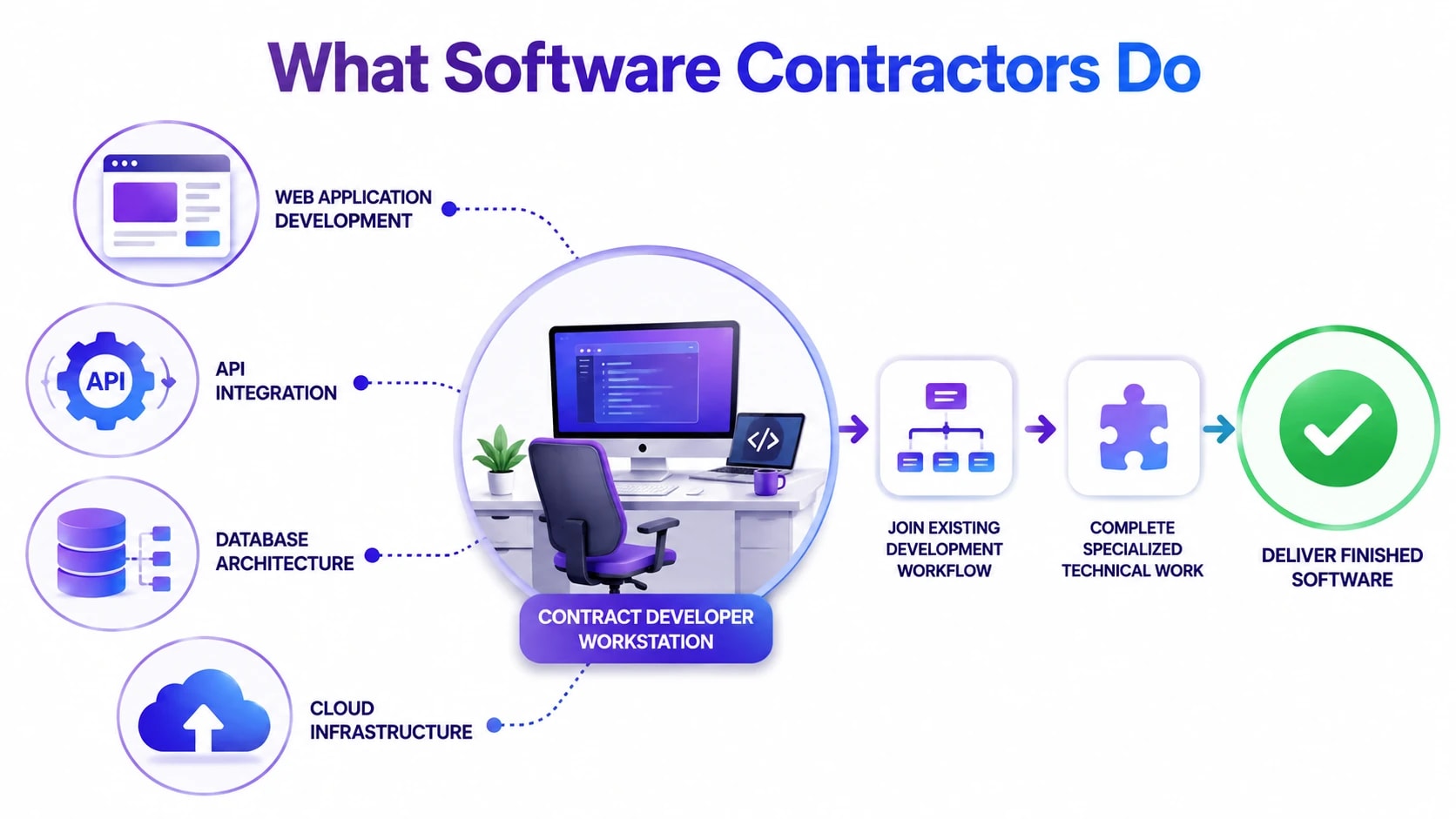
A software development contractor is an independent professional, or sometimes a small firm, hired to complete specific technical work for a defined period or project scope. Unlike a full-time employee, a contractor is not on your payroll permanently. They come in, do the work, and move on, though many engagements do extend over months or even years when the fit is right.
The scope of what a contractor handles varies widely depending on the engagement. Some are brought in to build an entire product from scratch, such as a SaaS application, a mobile app, or a customer-facing web platform. Others slot into an existing team to handle a specific layer of the stack, whether that is backend API development, frontend interface work, database architecture, or DevOps infrastructure. Some contractors specialize in a single language or framework, while others bring broader full-stack capabilities.
Beyond writing code, experienced contractors often contribute in ways that go deeper than execution. They ask the right questions early, flag technical risks before they become expensive problems, and make architectural decisions that affect how maintainable and scalable your product will be long after the engagement ends. A strong contractor does not just deliver features; they deliver working software that your team can build on.
Common deliverables from a software development contractor include:
- Custom web applications built on frameworks like React, Next.js, Django, or Laravel
- RESTful or GraphQL APIs that power mobile and web clients
- SaaS platforms with subscription billing, user authentication, and multi-tenancy
- WordPress development, including custom themes, plugins, and headless CMS setups
- Database design, query optimization, and migration work
- Cloud infrastructure setup on AWS, Google Cloud, or Azure
- Code audits and refactoring of legacy systems
It is also worth noting that contractors operate differently from agencies. A contractor is typically an individual professional with direct accountability for the work. An agency adds layers of account management and may rotate developers across your project. Both have their place, but if you want consistent hands on your codebase and direct communication with the person building your product, a contractor is usually the better fit.
Software Development Contractor Rates: What to Expect in 2026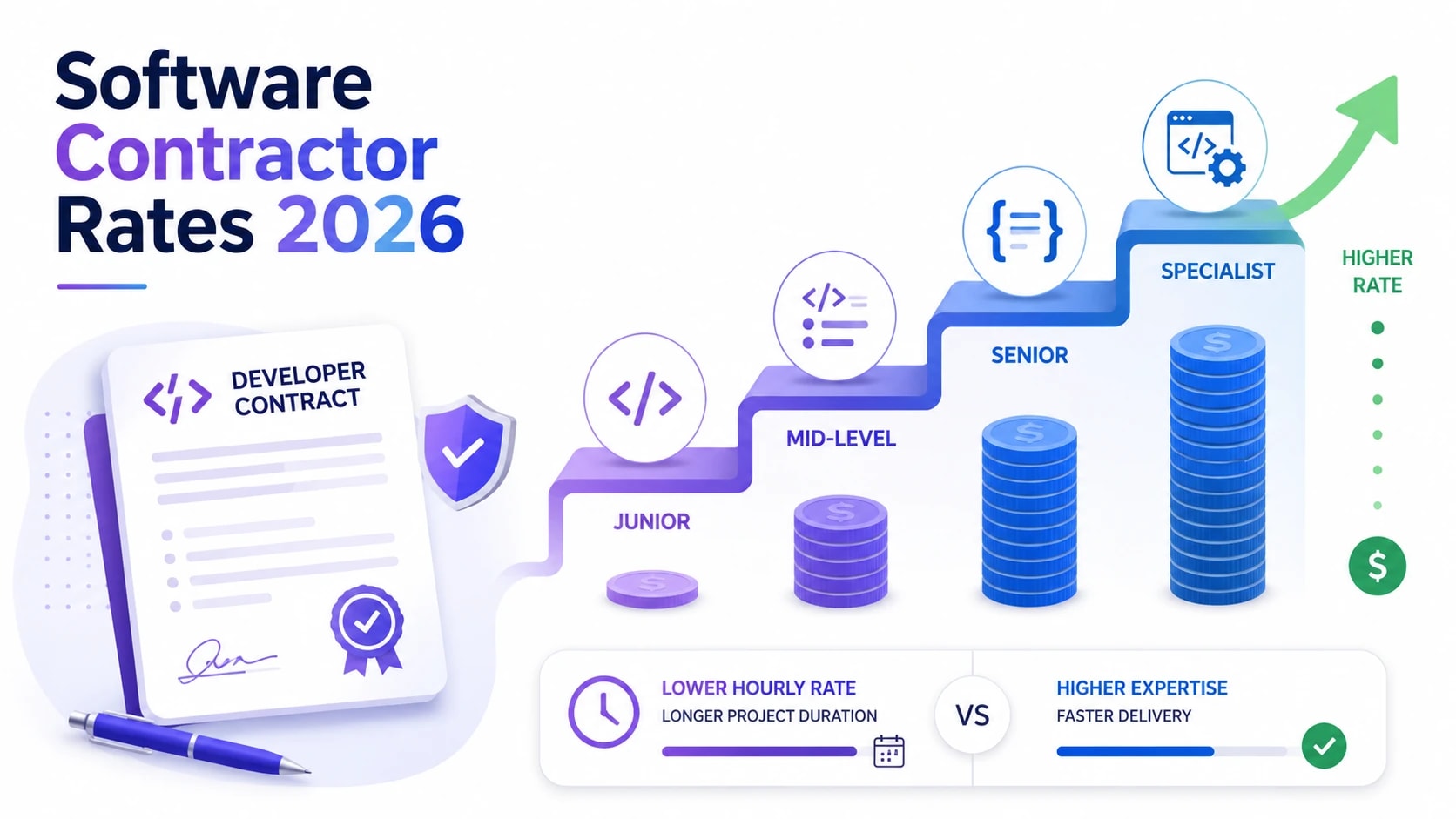
Rates for software development contractors vary significantly based on location, specialization, experience level, and the complexity of what you are building. That said, having a realistic ballpark before you start outreach will save you a lot of back-and-forth.
In 2026, hourly rates for software development contractors in the United States and Canada generally fall within these ranges:
- Junior contractors (1 to 3 years of experience): $60 to $95 per hour
- Mid-level contractors (3 to 6 years of experience): $95 to $150 per hour
- Senior contractors (6 or more years of experience): $150 to $250 per hour
- Specialist contractors (AI/ML, blockchain, security, cloud architecture): $200 to $350 or more per hour
UK-based contractors typically range from £400 to £900 per day, depending on seniority and specialization. Contractors based in Eastern Europe, Latin America, or South and Southeast Asia often come in at $30 to $80 per hour, with rates reflecting both regional cost structures and, in many cases, strong technical depth that competes well with Western-market peers.
Project-based pricing is another common model, particularly for well-scoped engagements. A contractor might quote a fixed price for building a specific feature set, an MVP, or a standalone API. Fixed-price contracts work well when requirements are clearly defined upfront. When scope is still evolving, time-and-materials is usually a safer arrangement for both parties.
A few factors that push rates higher include:
- Niche framework expertise, such as deep knowledge of a specific headless CMS, a payment infrastructure platform, or an industry-specific compliance standard
- Short notice or urgent timelines that require the contractor to deprioritize other clients
- Ongoing availability expectations, such as being reachable during specific business hours across time zones
- Security clearance or regulated industry experience in sectors like healthcare, fintech, or government
One thing worth keeping in mind: the lowest rate rarely delivers the best outcome. A contractor charging $80 per hour who needs three months to build something that a $160-per-hour contractor could complete in six weeks is not actually cheaper. Total cost of the engagement, not hourly rate, is the number that matters.
How to Write a Software Development Contractor Contract That Protects You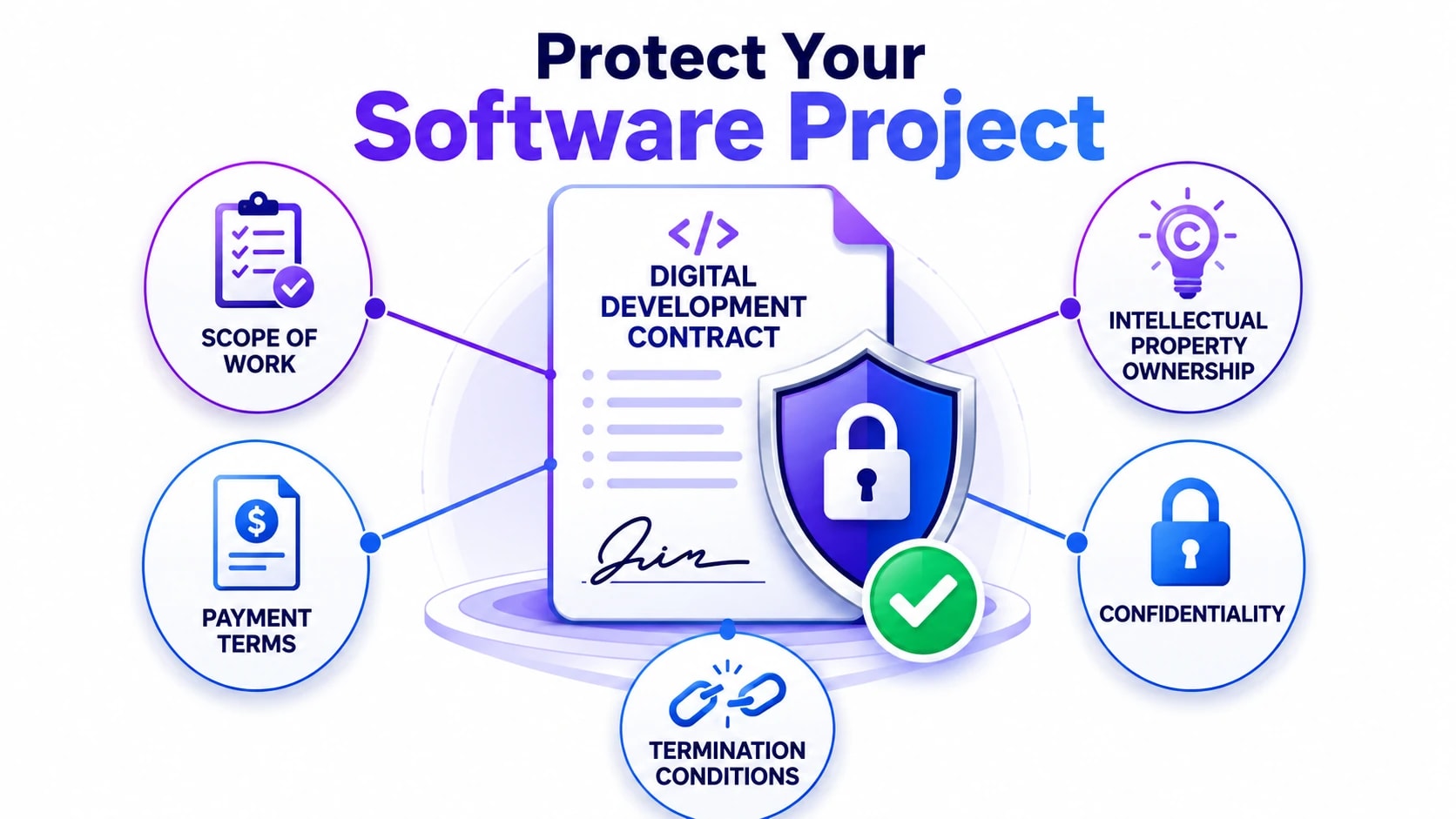
A handshake and a Slack message are not a contract. Whether you are a business hiring a contractor or a developer taking on a new client, a well-structured agreement is the single most important document you will produce before a line of code gets written. Contracts prevent scope creep, clarify payment terms, and give both sides a clear path forward if something goes wrong. Skipping this step, or using a generic template downloaded from a random website, is one of the most common and costly mistakes both sides make.
At a minimum, your software development contractor contract should cover ownership of the deliverables, confidentiality, payment schedule, termination conditions, and dispute resolution. Intellectual property clauses deserve special attention. Make sure the contract explicitly states that all code, designs, and documentation produced during the engagement transfer to the client upon full payment. Without this language, a contractor could technically retain ownership of work they built for your product. Non-disclosure agreements should be baked directly into the contract rather than handled as a separate document, which reduces the risk of something slipping through the cracks.
Scope of work is where most contractor relationships break down. Vague language like “build a dashboard” will be interpreted differently by everyone involved. Instead, attach a detailed statement of work (SOW) as an appendix that defines specific features, acceptance criteria, revision rounds, and what falls outside the project. Use milestone-based payment schedules tied to deliverable approvals rather than fixed calendar dates, since software timelines shift. Here are the core clauses every contract should include:
- Scope of Work (SOW): Detailed description of deliverables, features, and exclusions
- Payment Terms: Hourly or milestone-based, invoice schedule, late payment penalties
- IP Assignment: Confirms full ownership transfers to client upon payment
- Confidentiality / NDA: Protects proprietary business logic and data
- Change Order Process: How out-of-scope requests are priced and approved
- Termination Clause: Notice period, kill fee, and ownership of work completed
- Dispute Resolution: Arbitration or jurisdiction preference
- Independent Contractor Status: Confirms the contractor is not an employee
Where to Find Qualified Software Development Contractors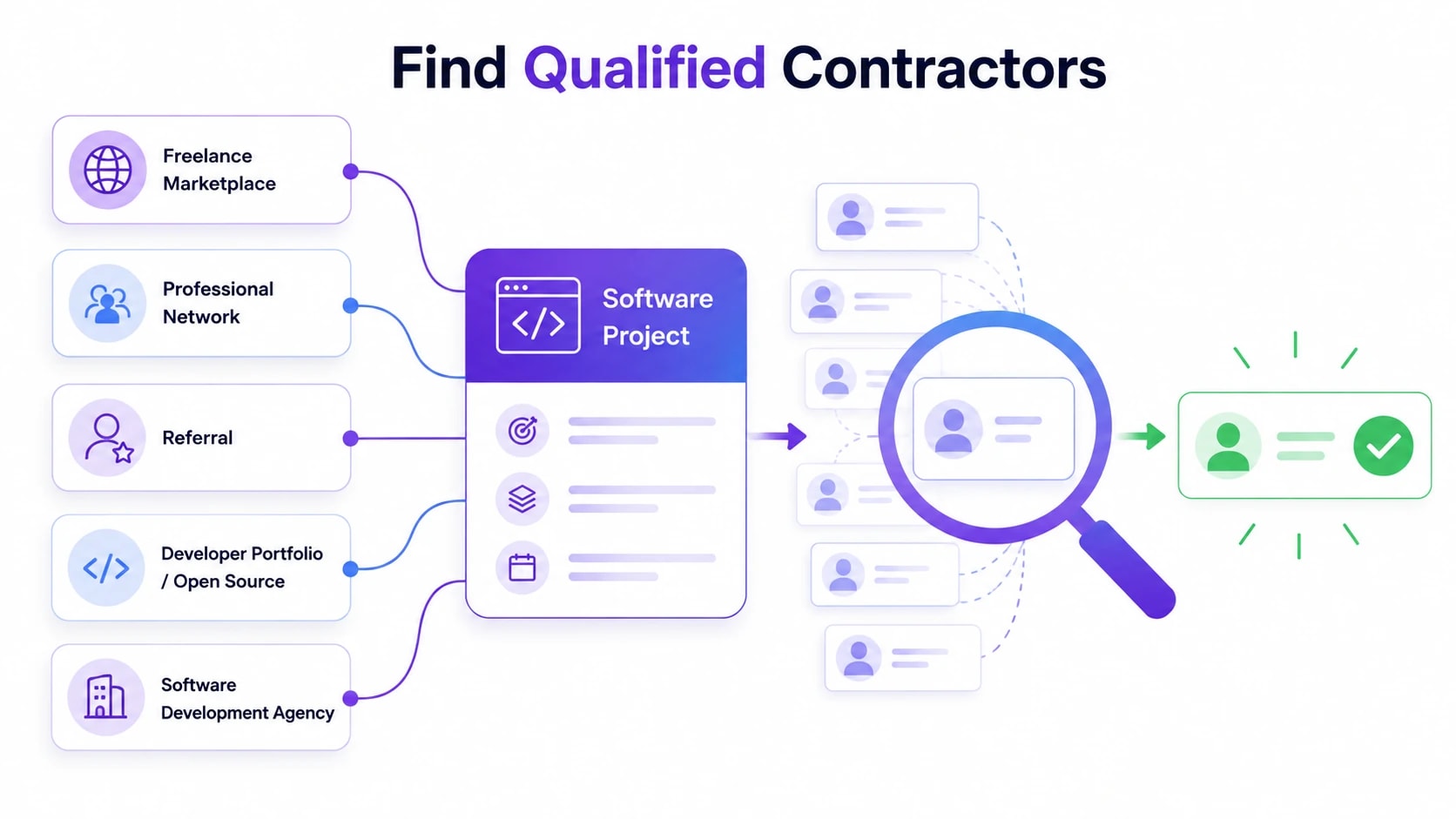
Finding a contractor is easy. Finding a qualified one who fits your project, timeline, and working style takes more effort. The channel you use to search matters because different platforms attract different contractor profiles. Freelance marketplaces like Upwork and Toptal serve very different ends of the market, and agencies that place contractors operate differently from both. Understanding where to look based on your project type will save you weeks of interviewing the wrong candidates.
For businesses building complex or high-stakes products, referrals and professional networks consistently outperform cold platform searches. A contractor who comes recommended by a trusted colleague or a former colleague who already knows your tech stack is worth far more than a five-star rating from strangers. LinkedIn remains one of the strongest sourcing channels for senior-level contractors, particularly for backend, cloud infrastructure, and architecture work. GitHub profiles, open-source contributions, and personal technical blogs are useful signal-rich resources for evaluating a contractor’s actual depth before you ever schedule a call.
| Platform / Channel | Best For | Typical Contractor Level | Cost Range (USD/hr) |
|---|---|---|---|
| Upwork | Short-term tasks, smaller projects | Junior to Mid-level | $25 to $95 |
| Toptal | Vetted senior talent, fast placement | Senior to Expert | $100 to $200+ |
| LinkedIn / Referrals | Complex projects, long engagements | Mid to Senior | $80 to $180 |
| GitHub / Open Source | Specialized technical roles | Mid to Expert | $90 to $200+ |
| Software Dev Agencies | Full-scope product builds, teams | Mixed, managed teams | $75 to $175 per resource |
How to Become a Software Development Contractor: The Business Side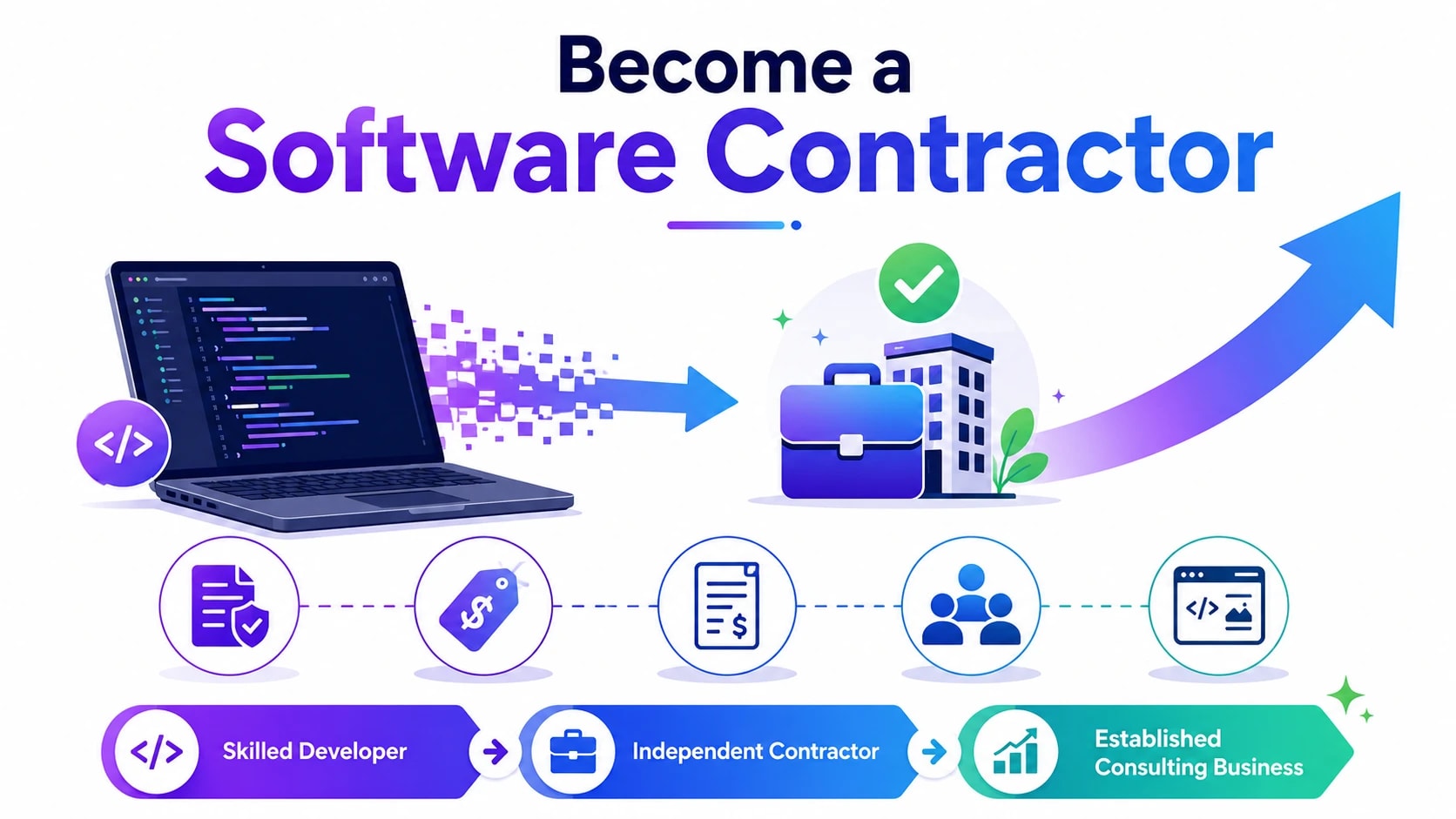
Most developers who go independent underestimate how much of contracting is running a small business. Writing good code is the technical foundation, but it will not keep clients coming back or payments arriving on time. Before taking your first paid engagement, you need a legal structure (LLC or sole proprietorship depending on your location), a basic contract template reviewed by a lawyer, a system for invoicing and tracking income, and a clear understanding of your tax obligations, including quarterly estimated payments in most countries. Skipping these basics early creates expensive problems later.
Pricing yourself is one of the harder adjustments for developers moving from salaried roles. A common mistake is calculating an hourly rate by simply dividing an annual salary by 2,080 hours. That ignores unpaid gaps between contracts, time spent on business development, benefits you now pay out of pocket, and the self-employment tax premium. A reliable starting formula is to take your target annual income, add 30 percent for overhead and taxes, add another 20 percent for non-billable hours, then divide by your realistic billable hours per year, typically 1,000 to 1,400 for most independent contractors.
Building a sustainable contracting practice also means developing a reputation that generates inbound work rather than chasing every listing. Specializing in a specific domain, such as SaaS architecture, API integrations, or e-commerce platforms, makes you more referable and allows you to charge rates that generalists cannot. Maintain a portfolio that shows real outcomes, not just screenshots, and document case studies that describe the problem, your approach, and the measurable result. Here is what the business side of contracting actually requires you to manage:
- Legal Setup: Business entity registration, professional liability insurance
- Contracts: Standard agreement template, NDA, change order process
- Finances: Separate business account, invoicing software, quarterly tax payments
- Pricing Strategy: Hourly vs. project-based, rate reviews every 6 to 12 months
- Pipeline Management: Always be nurturing the next engagement before the current one ends
- Portfolio and Presence: LinkedIn, GitHub, case studies, or a simple personal site
- Client Communication: Clear status updates, documented decisions, professional boundaries
Red Flags on Both Sides of a Contractor Engagement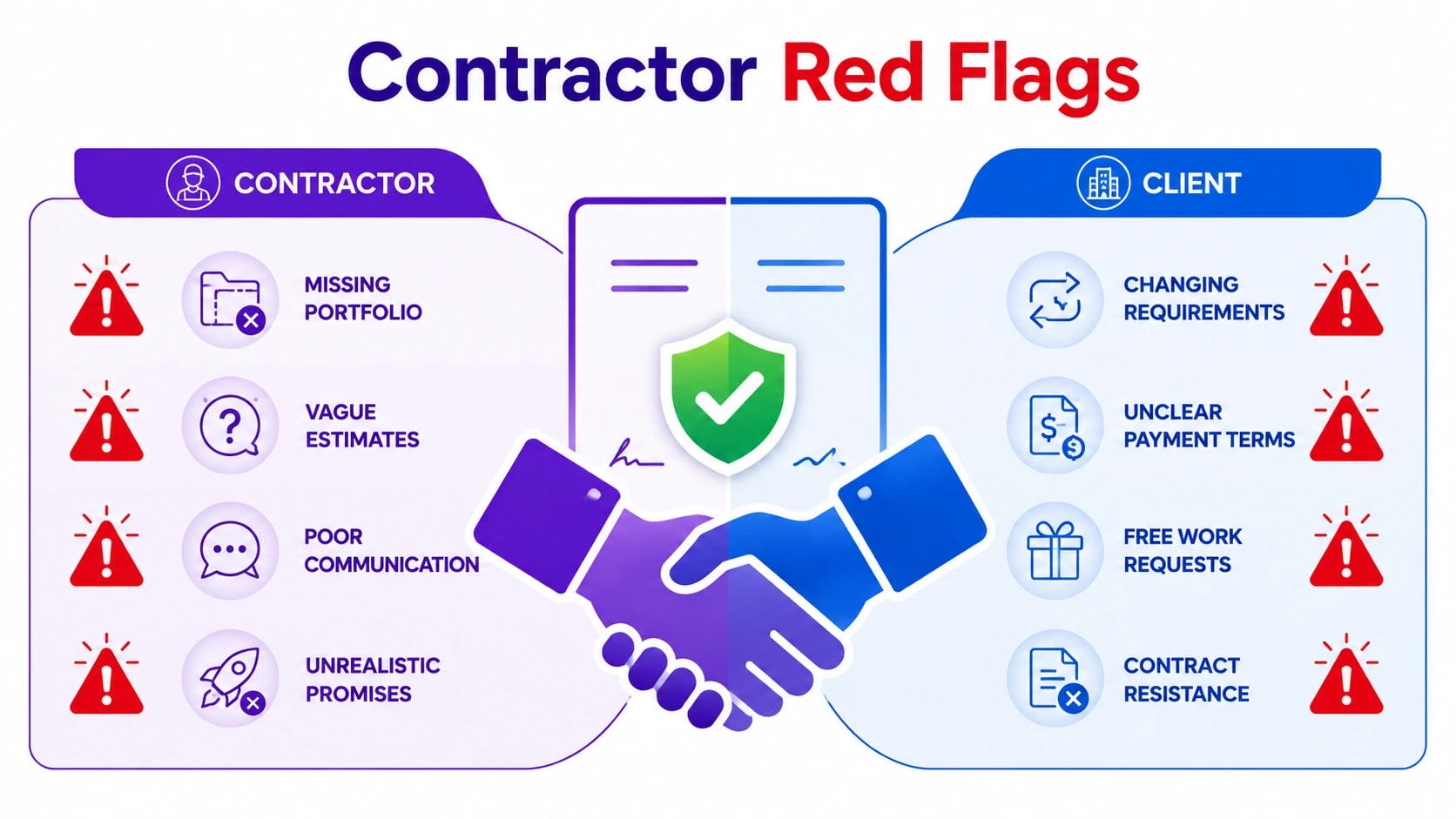
A contractor engagement can go wrong from either direction. Clients sometimes make unreasonable demands or fail to communicate clearly. Contractors sometimes overpromise or disappear mid-project. Knowing the warning signs before you commit protects your time, money, and product.
Red Flags Clients Should Watch For
- No portfolio or verifiable work history: A serious contractor has shipped real products. If they cannot point to specific projects, codebases, or client references, proceed with caution.
- Vague estimates with no breakdown: Quoting a flat number without explaining scope assumptions usually signals either inexperience or intentional ambiguity that leads to scope creep disputes later.
- Reluctance to sign a contract: Any professional contractor expects a written agreement. Resistance to putting terms in writing is a serious warning sign.
- Requesting large upfront payments: A reasonable deposit is normal, but anyone asking for 50 percent or more before a single line of code is written is a risk.
- Poor communication in the hiring stage: If responses are slow, vague, or inconsistent before the engagement starts, that pattern almost always continues once they are paid.
- Promising timelines that seem impossibly fast: Agreeing to unrealistic deadlines without flagging risks usually means they are telling you what you want to hear, not what is true.
Red Flags Contractors Should Watch For in Clients
- No clear project brief or constantly shifting requirements: Clients who cannot define what they need will drain your time and dispute your invoices when the moving target is never hit.
- Resistance to a written contract: This protects both parties. A client who avoids contracts is a client who may avoid paying.
- Pushing for below-market rates with promises of “future work”: Speculative future projects rarely materialize and should never justify undercharging today.
- Requesting free discovery or unpaid trial work beyond reasonable scope: A short paid test task is fair. Weeks of free work disguised as an audition is not.
- Slow payment history or unclear payment terms: Always confirm payment schedules before starting. Ask for references from past contractors if you have doubts.
Quick Comparison: Healthy vs. Problematic Engagement Signs
| Signal | Healthy Engagement | Problematic Engagement |
|---|---|---|
| Communication | Prompt, clear, and consistent | Slow, vague, or disappears |
| Contract | Both sides sign without hesitation | One side resists or delays signing |
| Scope definition | Detailed brief with documented requirements | Vague goals, constant changes |
| Payment terms | Agreed milestones with clear schedule | Vague, delayed, or disputed invoices |
| Expectations | Realistic timelines with honest tradeoffs | Impossible deadlines or vague promises |
| Portfolio or references | Available and verifiable | Missing, vague, or unverifiable |
Trust your instincts during the early stages. The way someone handles the hiring conversation is usually the best preview of how they will handle conflict when the project gets complicated.
Conclusion
Working with a software development contractor gives businesses genuine flexibility and access to specialized skills without the overhead of a permanent hire. But like any professional relationship, success depends on clear expectations, a solid contract, honest communication, and knowing what warning signs to watch for on both sides. Whether you are a startup moving fast on an MVP or an established business filling a technical gap, a well-chosen contractor can deliver real results when the engagement is structured properly.
If you are unsure where to start or want experienced developers who understand scope, timelines, and quality from day one, Techlad works with businesses to build scalable products without the guesswork. Reach out to discuss your project and find the right approach for your situation.
Frequently Asked Questions
What is the difference between a software development contractor and a freelancer?
The terms are often used interchangeably, but contractors typically work under a more formal arrangement, sometimes through a limited company or agency, with defined deliverables and a written contract. Freelancers may work more informally across multiple small clients at once. In practice, both are self-employed and project-based.
How long does a typical software development contractor engagement last?
Engagements vary widely. Short-term projects like API integrations or bug fixes might last a few days to a few weeks. Larger builds such as SaaS platforms or mobile apps commonly run three to six months. Ongoing retainer arrangements can extend for a year or more depending on business needs.
Who owns the code a contractor writes?
Ownership depends entirely on your contract. Without a written IP assignment clause, contractors may retain rights to their work in some jurisdictions. Always include a clear intellectual property transfer clause that assigns all code, documentation, and related work product to the client upon final payment.
Is it cheaper to hire a contractor or a full-time developer?
Hourly contractor rates often appear higher than salaried developer costs, but contractors come without benefits, payroll taxes, equipment costs, or severance obligations. For project-based or short-term needs, contractors are usually more cost-effective. For long-term, full-time work, a permanent hire may offer better value over time.
What should I test for before hiring a software development contractor?
Ask for a relevant code sample or a small paid technical task that mirrors your actual project. Review how they communicate, whether they ask clarifying questions, and how they handle ambiguity. Check references from past clients and verify that previous work they claim matches the technology stack your project requires.